top of page

Yoga Meditation Retreat Victoria: How to Choose a Restful Escape

Writer: Massoga® Massage Yoga
Massoga® Massage Yoga
Sep 29
10 min read

What if the right yoga meditation retreat victoria is the one that leaves room to rest, rather than filling every part of the day? A beautiful setting may draw you in, but a packed programme can feel very different from the gentle pause you’re hoping for.


When comparing retreats, it’s reasonable to want clear answers before you commit. How active are the days? Is meditation guided, optional or scheduled? And does the pace leave time to settle, rather than adding another routine to keep up with?


This guide explains how to compare retreat formats, which questions to ask and how to find an experience that suits your needs. You’ll also learn what Massoga® Massage Yoga offers: an integrated approach combining massage with restorative Yin yoga. As programme details can vary, confirm meditation arrangements and other inclusions directly before booking. Start by considering what rest means to you.


Key Takeaways


  • Choose a yoga meditation retreat victoria by its pace and the kind of rest you want, not simply by its setting.

  • Check how yoga, meditation and any massage are included, and ask about session length, quiet time and transitions.

  • Compare restorative, mixed-pace and intensive formats by movement, free time, facilitator support and participation expectations.

  • Before booking, review the programme, facilitator information, accessibility, accommodation and cancellation terms.

  • Massoga® combines massage with restorative Yin yoga. Confirm retreat dates, inclusions and whether meditation is part of the programme.


Table of Contents


What to look for in a yoga meditation retreat in Victoria


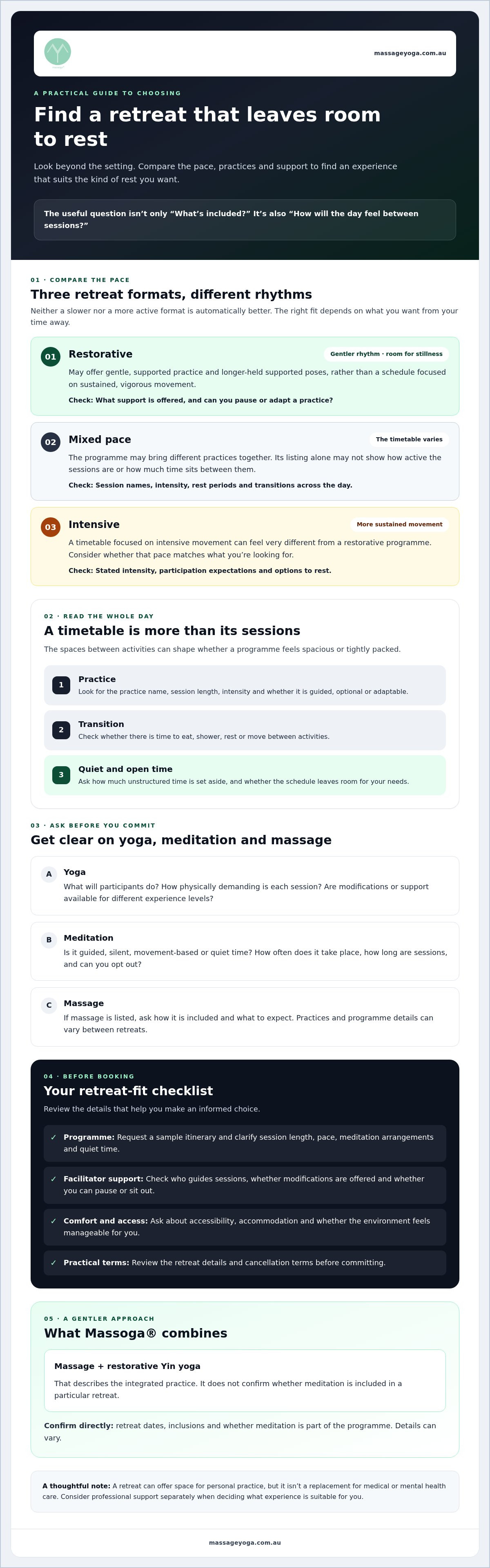
Retreat listings can make very different experiences sound alike. A quiet setting and the words “yoga” or “meditation” don’t reveal how full the days will be, how much movement to expect or whether there’s time to pause. When choosing a yoga meditation retreat victoria, look beyond the description and compare the pace, practices, facilitator support, comfort and overall fit.


A restorative retreat differs from a timetable built around intensive movement. Neither is automatically better; the right format depends on what you want from your time away. If you’re new to yoga or craving a gentler rhythm, ask how sessions are guided and whether you can rest or adapt a practice to suit your needs. Yoga encompasses a range of spiritual practices or disciplines, so the word alone won’t tell you what a particular retreat includes.


What does a restorative retreat usually involve?


A restorative yoga retreat offers a slower rhythm, with gentle, supported practice and room for stillness rather than a schedule focused on sustained, vigorous movement. Restorative yoga may involve settling into supported poses for longer periods, although each provider’s approach can differ.


Meditation may be included, but its format and place in the programme aren’t universal. Check whether it’s guided, optional or scheduled, and ask how much quiet time is set aside. Retreat lengths and daily schedules vary, too. Request a sample itinerary if you want a clearer picture of the day’s flow.


Who might value a slower retreat pace?


A gentler programme may appeal if you’re seeking quiet, guided practice and time away from everyday demands. It may also suit beginners who want to learn without feeling they need to keep up. Before booking, ask whether modifications are offered, what support is available during sessions and whether you’re welcome to pause or sit out when needed.


Consider practical comfort as well as the practice itself. Find out what the accommodation is like, how much unstructured time the schedule allows and whether the retreat environment feels manageable for you. Share any access needs or questions with the provider before committing, so you can make an informed choice.


A retreat can offer space for personal practice, but it isn’t a replacement for medical or mental health care. If you need professional support, consider that separately when deciding what kind of experience is suitable for you.


How yoga and meditation shape the retreat experience


A retreat’s character comes not only from the practices on offer, but from how they fit together across the day. Yoga, meditation and massage are distinct elements, and providers may offer one, two or a combination. Look at the full rhythm: a short practice followed by open time can feel very different from a tightly scheduled programme, even if both use similar labels.


A yoga session guides attention through physical postures and movement; a meditation session focuses on awareness and stillness, which may be guided, silent or movement-based. This distinction is useful when a listing uses broad terms such as “mindfulness” without explaining what participants will actually do.


How to read a retreat yoga schedule


Scan for practice names, session length, stated intensity and rest periods between activities. A timetable that lists only “yoga” doesn’t show whether a session is gentle or physically demanding, or how much time you’ll have to settle afterwards. Check whether practices are guided, optional or adapted for different experience levels. If the schedule is brief, ask the organiser what a typical day involves, including the transitions between sessions.


Those transitions matter. Time to eat, shower, rest or move between activities can determine whether a programme feels spacious or tightly packed. Consider whether the pace leaves room for your needs, not just the listed sessions.


How to check what meditation means at a retreat


Ask the organiser to describe meditation specifically. Is it guided, silent, movement-based or simply quiet time? Confirm how often sessions take place, how long they last and whether you can opt out. These details help you understand the experience without assuming that every retreat uses the same approach.


In Massoga®, massage is combined with restorative Yin yoga. That describes the practice, but doesn’t establish whether meditation is part of a particular retreat programme. Ask the organiser to confirm current programme details before booking. For more context on how Yin yoga can make space for stillness, read about the art of deep rest and restorative Yin yoga if that article is available on the site.


Use the schedule to guide your questions, not your expectations. If you’re looking to make more room for rest, you can explore the rest sign-up.


Restorative yoga retreat or intensive yoga getaway: how to compare


A yoga retreat doesn’t automatically mean frequent or strenuous practice. Some programmes centre on slower movement and open time; others have a fuller schedule or more physically demanding sessions. These labels can help you start comparing, but they aren’t standardised. For a yoga meditation retreat victoria, the timetable and the organiser’s answers will tell you more than the retreat name alone.


Use this guide as a starting point, not a rating of providers. Each organiser may use these terms differently.


Which retreat format suits your energy and experience?


Think about the capacity you have now, not what you feel you should be able to do. If you want more space between sessions, look for a timetable that clearly shows rest periods. Ask whether modifications are offered, whether you can pause or opt out, and how facilitators support people with different experience levels. “Beginner-friendly” is useful, but it doesn’t mean every session will suit every person.


What questions reveal the real pace of a retreat?


Ask how many movement sessions are planned each day, how long they last and how their intensity changes. If meditation is mentioned, check whether it’s scheduled, what participants will do, how often it takes place and whether it’s optional. If promotional wording feels vague, request a sample day or a clearer description. A considered answer can help you judge whether the programme feels manageable and right for you.


Choose a rhythm that feels appropriate for your needs. The most useful comparison is one that helps you understand what you’re agreeing to before you book.


Yoga meditation retreat victoria


A practical checklist for choosing a yoga meditation retreat in Victoria


Before booking a yoga meditation retreat victoria, check the details behind the inviting description. A clear programme, practical comfort and a manageable pace can help you decide whether the experience fits. Note anything the listing doesn’t answer and ask the organiser directly rather than filling in the gaps yourself.


  • 1. Confirm the programme. Check the dates, daily schedule and what’s included. Ask how many yoga and meditation sessions are planned, what each involves and whether participation is flexible.

  • 2. Understand who will facilitate. Find out who leads the sessions and what experience or training they can describe. Ask how they support people with different levels of experience or needs.

  • 3. Check access and comfort. Ask directly about mobility and accessibility arrangements, and whether relevant dietary needs can be accommodated. If a trauma-sensitive approach matters to you, ask how participant choice, options to pause and comfort are considered. A trauma-sensitive yoga guide can also help you reflect on which questions to ask.

  • 4. Clarify accommodation and inclusions. Confirm the accommodation arrangements, which meals or other inclusions are specified, and what you’ll need to bring or supply yourself.

  • 5. Read the cancellation terms. Understand the provider’s cancellation and change conditions before committing. If any terms are unclear, ask for an explanation in writing.


Consider the feel of the retreat, not just the checklist. Are you hoping for solitude, shared activities, guided practice or flexible downtime? Does the timetable leave room for the kind of quiet you’re seeking? A retreat can sound restorative while having a fuller schedule than you’d prefer, so compare your hopes with the actual itinerary.


Write down unanswered questions before contacting the organiser. For example: “How much free time is there each day?” or “Can you explain what a meditation session involves?” Clear answers can help you assess whether the experience feels like a fit. If you’re considering Massoga®, confirm current retreat dates, inclusions, booking arrangements and whether meditation is part of the programme.


A gentler retreat approach with Massoga®


After comparing formats, you may be drawn to an experience that brings different forms of care together at a slower pace. Massoga® combines massage with restorative Yin yoga, an integrated approach that differs from a timetable centred on frequent movement sessions. It may appeal if you’re looking for a retreat where these practices are paired rather than a conventional drop-in group yoga class.


That distinction is about the format, not a promise of a particular result. Each person’s experience is their own. To understand whether the approach suits you, check the current retreat details and ask questions that matter to your comfort.


What makes Massoga® different from a standard yoga class?


Massoga® brings massage and restorative Yin yoga together. Rather than offering drop-in group classes or traditional Vinyasa flow, its approach combines bodywork with slower, sustained yoga practice. This may suit people seeking a more restorative pace and an integrated experience. If you’re comparing a yoga meditation retreat victoria, keep the distinction clear: the confirmed Massoga® approach is massage and restorative Yin yoga, not an assumed meditation programme.


How to take the next step at your own pace


Before deciding, check the current retreat information and confirm the dates, inclusions, schedule and booking arrangements directly. Ask whether meditation is included and, if so, what it involves. You can also clarify how the yoga and massage are arranged and whether the programme allows flexibility around participation. Details may change, so rely on current information rather than assumptions based on a previous listing.


You don’t need every answer before making an enquiry. Write down what you’d like to know, then ask the organiser to explain anything that feels unclear. Questions about pace, comfort and programme details are a sensible part of choosing a retreat, not a commitment to book.


Take your time. If this approach feels aligned with the kind of rest you’re seeking, you can share your interest in a Massoga® retreat and ask about current details.


Choose the pace that lets you rest


The right retreat isn’t necessarily the one with the fullest timetable or the most appealing setting. Look closely at the practices, daily rhythm, facilitator support and practical details, then ask the organiser about anything unclear. A clear schedule can help you choose a yoga meditation retreat victoria experience that suits your energy and preferences.


If you’re drawn to a slower, integrated approach, Massoga® combines massage with restorative Yin yoga. Founded in 2016 by Wallis Murphy-Munn, the practice brings bodywork and gentle yoga together. Check current retreat details directly, including whether meditation is included and what the programme involves.


Let your questions guide you. There’s no need to rush a decision; a little clarity can help you take your next step with greater ease.


May you find an experience that gives you room to pause, settle and reconnect with the pace that feels right for you.


Frequently Asked Questions


What should I look for in a yoga meditation retreat in Victoria?


Look for a clearly described programme that matches the pace and kind of rest you want. For a yoga meditation retreat victoria, check the yoga styles, session frequency and intensity, whether meditation is included, and how much unstructured time there is. Review facilitator information, accommodation, accessibility, inclusions and cancellation terms as well. If a listing leaves details unclear, ask the organiser before booking rather than relying on the retreat’s name or promotional wording.


Is meditation always included in a yoga retreat?


No, meditation isn’t automatically included just because a retreat mentions yoga or wellbeing. Some programmes may schedule guided or silent meditation, while others may offer quiet time without a formal session. Ask the organiser whether meditation is part of the programme, how often it takes place, what participants do and whether it’s optional. Check the specific retreat details, as practices and schedules can vary between providers and individual retreats.


Can beginners attend a yoga meditation retreat?


Beginners may be welcome, but suitability depends on the retreat’s practices and how sessions are facilitated. Before booking, ask whether the programme is designed for different experience levels, what modifications are available and whether you can pause or opt out of an activity. “Beginner-friendly” doesn’t necessarily mean every session will suit every participant. Share relevant questions or needs with the organiser so you can make an informed choice.


How do I know whether a retreat will be restful or physically demanding?


Read the daily schedule for the number, length and stated intensity of movement sessions, along with breaks and free time. Words such as “restorative” or “deep rest” can mean different things between providers, so ask what a typical day involves. Check whether sessions are optional, how facilitators support participants and whether the programme allows time to rest between activities. A sample itinerary can make the overall pace easier to assess.


What is the difference between restorative yoga and an intensive yoga retreat?


Restorative yoga generally involves a slower practice, often with supported poses and more emphasis on stillness, while an intensive retreat may schedule more frequent, longer or physically demanding movement sessions. These descriptions aren’t standardised, and programmes differ. Compare the timetable, session intensity, rest periods and participation expectations rather than choosing by label alone. Ask the organiser to explain any practice names or promotional terms that aren’t clear.


Does Massoga® combine massage and yoga at its retreats?


Yes. Massoga®’s approach combines massage with restorative Yin yoga. Check the details for a particular retreat, including dates, inclusions and whether meditation is offered, directly with the organiser. Don’t assume meditation is included or infer a schedule from the retreat description. If this integrated approach interests you, ask what the current retreat involves and how the massage and yoga elements are arranged.


What should I ask before signing up for a retreat?


Ask for the current dates, daily schedule, inclusions, accommodation arrangements and cancellation terms. Clarify how many yoga and meditation sessions are planned, their style and intensity, whether participation is flexible, and what you’ll need to bring. You can also ask who facilitates the sessions, what support is available for different experience levels, and whether accessibility, mobility or dietary needs can be accommodated. Note any unanswered questions and request clear details before you commit.


Comments


Written by Wallis Murphy-Munn

Wallis Murphy-Munn is the founder of Massoga®, a unique practice that combines the therapeutic benefits of massage with the restorative elements of Yin Yoga.


Her hands-on teaching approach has led to deeper relaxation for her students, inspiring the creation of Massoga®.


In addition to her practice, Wallis enjoys writing blog articles to share her insights, advocating for the importance of human touch and simple connections in an increasingly isolated world.

14.png

About

Yoga Retreats

Other Services 

  • Instagram
  • Facebook
  • LinkedIn

We acknowledge the traditional owners of the land in all the regions of the beautiful countries we travel to and experience on retreat. The custodians of Kulin Nation, in the regions of the Woiworung, Boonwurrung and Wathaurong People. The custodians of the Yunbenun of the Wulgurukaba People. We acknowledge their Ancestors past, present and future who nurtured and cared for Country for tens of thousands of years.

© 2025 Massoga® Massage Yoga | Website by Insight Culture

bottom of page