top of page

Can You Do a Yoga Retreat as a Beginner? What to Expect

Writer: Massoga® Massage Yoga
Massoga® Massage Yoga
Oct 2
10 min read

What if your first yoga retreat didn’t ask you to master a pose, but simply invited you to slow down? If you’re wondering, can you do a yoga retreat as a beginner, the answer is yes. A welcoming retreat can make space for newcomers, with a pace that lets you listen to your body rather than keep up with anyone else.


It’s understandable to wonder whether the sessions will feel demanding, what the days will involve or whether you’ll stand out beside more experienced participants. Retreats vary, so check the style and pace of the practice, the number of scheduled activities and how much downtime the programme allows. You don’t need to become an experienced yogi before you go. Start by choosing an experience that feels gentle and restorative.


In this guide, you’ll learn what can make a retreat suitable for beginners, what a retreat day might include and how to prepare without pressure. You’ll also discover how Massoga® combines restorative Yin yoga with massage for a slower way to explore retreat practice. Take a breath. There’s room to move at your own pace.


Table of Contents


Can Beginners Do Yoga Retreats? No Experience Required


Yes, you can do a yoga retreat as a beginner, provided the format and pace feel right for you. A beginner-friendly retreat lets you participate without advanced poses or previous retreat experience, and treats resting or choosing a gentler option as valid. Not every retreat suits every person, so look beyond the word “yoga”. Check what the sessions involve, how active they are and whether the programme leaves room to pause.


A retreat is broader than a single yoga class. It may bring together practice, meals, time in shared spaces and periods of rest. The idea connects with Yoga tourism, travel undertaken with the purpose of practising yoga, but the experience can differ from one retreat to another. You don’t need to arrive knowing exactly what to expect. It helps to have a sense of the pace and setting that would make you comfortable.


Do you need yoga experience before booking a retreat?


There’s no universal experience threshold for attending. Some retreats welcome complete newcomers, while others may be built around longer or more active sessions. Not knowing terms such as “asana” or “child’s pose” doesn’t mean you can’t take part. You can learn instructions as you go, follow them gradually and pause whenever you need to.


Curiosity is enough to begin, as is a willingness to notice how you feel and rest when that feels right. You’re not expected to arrive with a polished practice or keep pace with someone who has attended retreats before. When comparing options, focus on whether the retreat’s style and schedule make room for your starting point.


Will you need to be flexible or fit?


No. Flexibility isn’t an entry requirement for a gentle yoga practice, and being new to yoga doesn’t mean you need to get fitter before attending. You can adapt a pose to your comfortable range of movement, choose a simpler position, sit out a movement or rest instead of trying to match the group.


Think of comfort as information, not a test. A retreat that suits you should leave room to respond to your own body, rather than treating flexibility, stamina or confidence as proof that you belong. You’re there to explore the experience at your pace, not to achieve a particular physical result.


What happens at a beginner yoga retreat, especially a restorative one?


A yoga retreat is an experience beyond the mat. Depending on the programme, it may include guided practice, meals, shared spaces and unstructured time to rest or take in your surroundings. There isn’t one standard timetable. Some retreats include a range of activities, while others leave more breathing room between sessions. Look at the full schedule, not just the yoga sessions, to picture whether the overall rhythm feels inviting or too full.


Restorative Yin yoga is a slow practice using settled shapes and pauses, giving you time to notice your breath and how your body feels. Rather than moving continuously from one pose to the next, you spend more time in each position, with room to adjust or rest. That slower rhythm can offer a different introduction to yoga, especially if keeping up with a fast-moving sequence feels daunting.


How does restorative Yin yoga feel different from a fast-paced class?


In a more active class, movement may flow from one shape to another. Restorative Yin yoga places more emphasis on stillness and unhurried transitions. Neither approach is inherently better. They offer different experiences. In a slower practice, you can pay attention to sensation, breath and comfort instead of worrying about whether a pose looks a certain way.


Listen to your body. If a position doesn’t feel right, pause, adjust or rest. For a balanced overview of yoga and safety considerations, the US National Center for Complementary and Integrative Health outlines the health benefits of yoga alongside points to consider when practising.


Where can massage fit into a yoga retreat?


Some retreat experiences bring different practices together. Massoga® combines massage with restorative Yin yoga, creating a slower, sensory experience that invites you to settle into each moment. It offers an alternative to a retreat centred on continuous movement and may appeal if you’re drawn to quiet practice and time to unwind. Read the guide to deep rest and restorative Yin yoga to explore this gentler style.


You don’t need to fill every quiet moment or arrive with a plan for how to spend it. If you’re curious about making more space for rest, explore a gentle invitation to rest.


How to tell whether a yoga retreat will suit you as a beginner


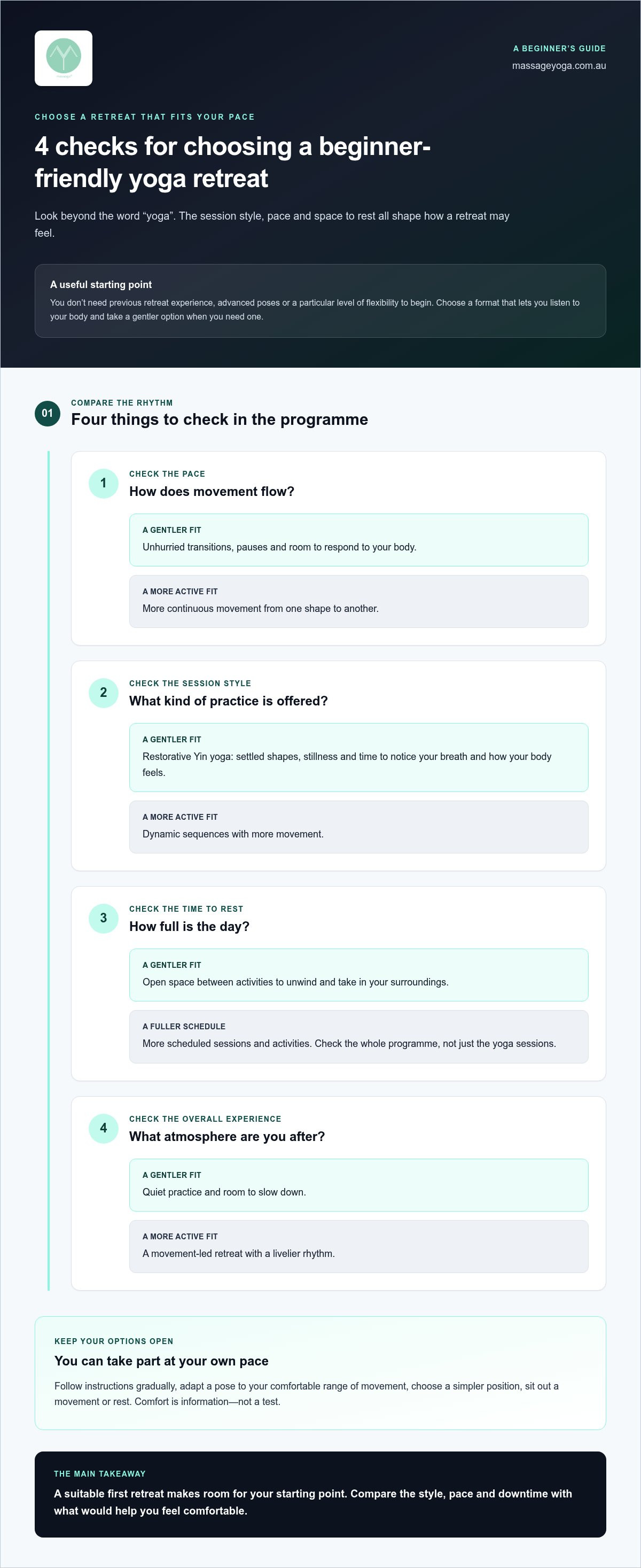
A retreat isn’t automatically a demanding sequence of group classes. Its pace, session style, room for downtime and overall atmosphere all shape the experience. If you’re asking, “can you do a yoga retreat as a beginner?”, use the comparison below to identify the elements that would help you feel at ease.


Neither column is the “right” choice for everyone. You might want a gentle introduction, enjoy a more active practice or simply be seeking space to unwind. Think about what you want from the retreat, not what you think a yoga retreat is supposed to look like. Johns Hopkins Medicine describes how yoga can support strength, balance and flexibility, but you don’t need to attend with a physical goal in mind. Your reason might simply be to make room for rest.


Which retreat style feels most approachable for a first timer?


Restorative Yin yoga generally moves at a slower pace, with settled shapes and pauses. More dynamic practice involves more frequent movement. Slower doesn’t mean you have to achieve a certain state of relaxation. You can notice what feels comfortable and let the experience unfold. Massoga® retreats offer a restorative option, bringing Yin yoga together with massage.


What if you feel nervous about joining a group?


It’s understandable to feel unsure about unfamiliar routines, shared spaces or meeting new people. You don’t have to be the most talkative person in the room or take part in every moment in the same way as others. Move at your own pace and allow yourself quiet moments when you need them. Massoga® also offers trauma-sensitive sessions, with an approach that makes space for choice and personal comfort. You don’t need to have experienced trauma to value those considerations.


If a slower retreat appeals, you can explore a gentle invitation to rest and consider what kind of space would feel supportive for you.


Can you do a yoga retreat as a beginner


How to prepare for your first yoga retreat without overthinking it


Preparation doesn’t mean becoming a yogi before you arrive. If you’ve wondered, “can you do a yoga retreat as a beginner?”, remember that getting ready can be as simple as noticing what helps you feel comfortable. A few thoughtful steps can make the experience feel more familiar without turning it into another task to perfect.


  1. Name your intention. Consider what you’d like to make space for. It might be quiet, gentle movement, time away from routine or simply a chance to pause. You don’t need a grand goal.

  2. Notice your preferred pace. Think about whether you enjoy slow, settled movement or feel at ease with more activity. Consider how much downtime helps you feel restored.

  3. Consider what brings comfort. If new routines or shared spaces feel unfamiliar, think about small things that help you settle, such as comfortable layers or allowing yourself quiet time.

  4. Keep any practice gentle. There’s no need to master poses or begin an intensive routine. If it feels welcome, try a few comfortable stretches or quiet breaths in your own time.

  5. Give yourself room to arrive. Don’t expect yourself to know everything straight away. Let the first moments be for taking in the space and settling into the rhythm.


What should you consider before your first retreat?


Let your intention guide your expectations. A retreat is an experience, not a test of ability, and you don’t have to feel calm, confident or transformed on cue. Think about what makes unfamiliar environments easier for you: a little time alone, knowing the day’s general rhythm or easing into conversations. Your preferences are useful information, not obstacles to overcome.


Do you need to practise yoga before you go?


No. A short, gentle introduction may make a few movements feel less unfamiliar, but it isn’t a condition of attending. Stretch only within a comfortable range, or take a few easy breaths if that feels good. During practice, resting, pausing or opting out of a movement are all valid choices. There’s no need to push yourself to prove you belong.


If you’re ready to explore a retreat experience, you can view the Massoga® retreat booking page at your own pace.


A gentler first retreat: explore Massoga® and take your next step


A first retreat doesn’t need to be a test of flexibility, stamina or yoga knowledge. It can be a chance to step out of your usual routine and explore an experience that feels comfortable. The key is finding a format and pace that leave room for your needs, whether that means gentle movement, quiet moments or time to pause.


How does Massoga® create a restorative retreat experience?


Massoga® retreats are luxury wellness experiences that combine massage with restorative Yin yoga. Rather than centring the experience on continuous, fast-paced movement, this approach brings together stillness, gentle shapes and massage. You can settle into the practice without needing to perform a pose perfectly or prove how much you know.


The experience takes a slower, more spacious approach, and each retreat has its own format. If you’d like to explore the ideas behind this style, read the guide to restorative Yin yoga retreats. It offers another way to consider whether a retreat centred on rest and restorative practice appeals to you.


What is a comfortable next step if you are still unsure?


Pause for a moment and notice what draws you in. Are you curious about slower movement? Does the thought of dedicated time to rest feel welcome? Those reflections can help you decide whether a restorative retreat feels like a natural starting point, without needing to make a decision before you’re ready.


If you’d like to explore the Massoga® retreat options, take a gentle look at the Massoga® retreat booking page. Let curiosity lead, not pressure. You don’t need to prove anything before making space for rest, and you don’t need prior experience to begin exploring a retreat that feels right for you.


Make space for a gentler first retreat


So, can you do a yoga retreat as a beginner? Yes, if the retreat’s pace and format feel comfortable for you. You don’t need to be flexible, fit or familiar with every pose. Look for an experience that makes room for your preferred level of movement, moments of rest and the freedom to pause.


A retreat is more than time on the mat, and its rhythm can vary. If you’re drawn to stillness, Massoga® offers luxury wellness retreats in Australia and internationally, combining massage with restorative Yin yoga. It’s a slower way to explore retreat practice without needing to prove your yoga experience.


Let your curiosity guide you. Take time to consider whether a restorative approach and dedicated space for rest feel right for you. There’s no need to rush or arrive with anything to prove.


Your first retreat can begin with a simple choice: honour the pace that feels right for you.


Frequently Asked Questions


Can you go on a yoga retreat if you have never done yoga before?


Yes, you can attend a yoga retreat without having practised yoga before, as long as the format feels suitable for you. There’s no universal experience threshold. Look for a retreat where the pace and style welcome newcomers and where you can choose a comfortable level of participation. You don’t need to know yoga terminology or arrive with a regular routine. Curiosity is a perfectly good place to start.


Do you need to be flexible to go on a yoga retreat?


No, flexibility isn’t a prerequisite for attending a yoga retreat. Gentle practice can be adapted to your comfortable range of movement, and poses don’t need to look a particular way. Notice how each position feels, and pause or rest if you need to. A retreat is an opportunity to explore the experience, not a test of flexibility or a promise that your body will change in a particular way.


What happens at a yoga retreat for beginners?


A beginner-friendly yoga retreat may include guided practice alongside meals, downtime and time in shared spaces. Some programmes include other activities, while others leave more room for quiet. There isn’t one standard daily schedule, so the experience depends on the retreat. In a restorative format, you may spend more time in slower, settled poses rather than moving continuously through a sequence.


Will a beginner yoga retreat be too physically demanding?


It depends on the retreat’s style, pace and schedule. A movement-led programme may feel more active, while a restorative retreat can centre on slower practice and rest. Consider what level of movement feels comfortable and choose a format that aligns with it. Massoga® retreats combine massage with restorative Yin yoga, offering a gentler style of wellness experience without requiring prior yoga experience.


Can you rest or skip a yoga session at a retreat?


Taking a pause or resting can be a reasonable part of participating, but retreat schedules differ. You can listen to your body, choose a gentler option or sit out a movement that doesn’t feel right. Joining a retreat doesn’t mean you must do every pose. Your comfort matters more than matching someone else’s pace.


What should a beginner bring to a yoga retreat?


Bring comfortable clothing that lets you move and relax, plus layers for changing conditions and your usual personal essentials. A water bottle and a notebook may also be useful if you like to jot down reflections. Use the packing guidance supplied for your retreat to see what is provided and what to bring. You don’t need special yoga gear to prove you belong.


Is restorative Yin yoga suitable for beginners?


Restorative Yin yoga can be a gentle way to explore yoga as a beginner. It generally involves slower transitions, settled shapes and pauses, giving you time to notice your breath and comfort rather than follow continuous movement. You can adjust a position, rest or stop if it doesn’t feel right. Massoga® retreats combine restorative Yin yoga with massage for a slower, sensory retreat experience.


Comments


Written by Wallis Murphy-Munn

Wallis Murphy-Munn is the founder of Massoga®, a unique practice that combines the therapeutic benefits of massage with the restorative elements of Yin Yoga.


Her hands-on teaching approach has led to deeper relaxation for her students, inspiring the creation of Massoga®.


In addition to her practice, Wallis enjoys writing blog articles to share her insights, advocating for the importance of human touch and simple connections in an increasingly isolated world.

14.png

About

Yoga Retreats

Other Services 

  • Instagram
  • Facebook
  • LinkedIn

We acknowledge the traditional owners of the land in all the regions of the beautiful countries we travel to and experience on retreat. The custodians of Kulin Nation, in the regions of the Woiworung, Boonwurrung and Wathaurong People. The custodians of the Yunbenun of the Wulgurukaba People. We acknowledge their Ancestors past, present and future who nurtured and cared for Country for tens of thousands of years.

© 2025 Massoga® Massage Yoga | Website by Insight Culture

bottom of page