

A Safe Gentle Space for Healing Bodies &
Tired Nervous Systems
Trauma-Aware Massoga® | Comfortably Clothed · Consent-led · Slow & Supportive
“Beneath the surface of the protective parts of trauma survivors there exists an undamaged essence, a Self that is confident, curious, and calm, a Self that has been sheltered from destruction by the various protectors that have emerged in their efforts to ensure survival. Once those protectors trust that it is safe to separate, the Self will spontaneously emerge, and the parts can be enlisted in the healing process.”
— The Body Keeps the Score, Bessel Van Der Kolk M.D.
 |  |  |  |  |
|---|
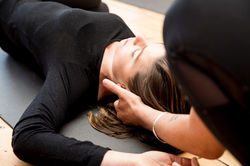
Massoga® is a deeply restful blend of restorative / Yin-inspired shapes and nurturing massage-style touch, offered while you remain fully clothed and supported by props.
This trauma-aware stream of Massoga® is created especially for people living with the effects of:
-
Physical or emotional trauma
-
Significant mental health challenges (including anxiety, depression, burnout)
-
Sexual violence or other experiences that have made touch feel complex or unsafe
It is not therapy or a replacement for medical care – but it can be a soft place for your body to exhale, your nervous system to settle, and your experience of touch to become gentler and more choice-filled again.
 |  |  |  |  |  |
|---|
Who Trauma-Aware Massoga® Can Support
You might resonate with one or more of these:
1. People who’ve experienced physical or emotional trauma
When your nervous system has been “on alert” for a long time, it can be hard to relax – even when you want to.
Trauma-Aware Massoga® offers:
-
Long-held, fully supported poses (no forcing, no stretching to your limit)
-
Gentle, optional touch layered over the shape of your body
-
Lots of time and space to feel into what feels safe for you might be like again
You don’t need to tell your story or “work on your trauma” in the session. The focus is simple: creating a calm, predictable, consent-led environment where your body can soften at its own pace.
2. People living with significant mental health concerns
This practice is designed as support alongside your existing care – not a replacement for therapy, medication, or professional treatment.
It may be helpful if you’re experiencing:
-
Anxiety, chronic stress or burnout
-
Low mood or depression
-
Overwhelm, exhaustion or difficulty switching off
What many people find helpful:
-
A predictable rhythm – arrive, check in, settle into a sequence of supported poses with touch (if chosen), then integrate slowly
-
Permission to rest – there is nothing to perform or get “right”; you are here to receive
-
Gentle sensory grounding – props, weight, and touch (if chosen) can help you feel more anchored in your body and in the present moment
3. People healing from sexual violence or complex experiences of touch
For survivors, touch can be complicated. This stream of Massoga® honours that by moving slowly and centring your choice at every step.
Key aspects include:
-
You will wear comfortable clothing for movement
-
We agree on clear boundaries together (what kind of touch, where, and how much – if any)
-
You can choose a low-touch or no-touch session
-
You can keep your eyes open or closed, ask for adjustments to lighting, music, where I stand in the room, and more
-
You are encouraged to say “stop”, “pause” or “that’s enough” at any time – no explanations needed
The intention is not to process traumatic events in detail, but to gently explore what safe-enough, nurturing touch and deep rest might feel like in your body again, only if and when it feels right for you.
 |  |  |  |  |  |
|---|---|---|---|---|---|
 |  |  |  |
What to Expect in a Trauma-Aware Session
While each session is tailored to you, the general shape looks like this:
-
Arrive & orient (5–10 minutes)
-
We check in about how you’re feeling physically and emotionally today
-
We clarify boundaries, preferred or off-limits areas for touch, and your comfort with pressure, silence, talking, music, etc.
-
We walk you through what will happen and how to say “no” or “change” at any time
-
-
Set up in supported poses (40–75 minutes)
-
You remain comfortably clothed
-
Your body is supported with props (bolsters, blankets, blocks) in gentle, restorative shapes
-
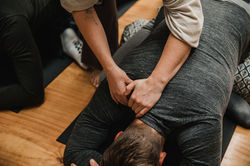
If you choose touch, massage-style techniques are layered over the poses: slow, nurturing, and non-sexual
-
I check in periodically with simple yes/no questions, so you don’t have to manage the session alone
-
-
Integration & grounding (5–15 minutes)
-
We give your body time to come back from deep rest
-
You can share anything that feels important (or stay quiet – both are welcome)
-
We make a simple plan for aftercare (water, food, rest, journaling, etc.)
-
 |  | |  |  | |
|---|---|---|---|---|---|
 |
Safety, Consent & Boundaries Come First
-
Comfortably clothed, always
Massoga® is practiced fully clothed. You’re welcome to wear soft, comfortable layers.
-
Clear, ongoing consent
Consent is not a one-time question at the beginning. I check in before touching new areas, and you can pause, change or withdraw consent at any point without needing to explain.
-
Your body, your pace
You choose whether you want more or less touch, or no touch at all. You can ask to adjust any pose, or skip anything that doesn’t feel right.
-
Non-sexual, therapeutic context
All touch offered in Massoga® is non-sexual and for relaxation and nervous system support only.
In order to change, people need to become aware of their sensations and the way that their bodies interact with the world around them. Physical self-awareness is the first step in releasing the tyranny of the past.
— The Body Keeps the Score, Bessel Van Der Kolk M.D
How Massoga® Fits With Therapy & Medical Care
Trauma-Aware Massoga® is a supportive, body-based practice. It can sit beautifully alongside:
-
Psychological therapy or counselling
-
Medical care, physiotherapy, osteopathy, chiropractic treatment
-
Other self-care and wellbeing practices
It is not:
-
A substitute for mental health treatment
-
A substitute for medical care or diagnosis
-
A crisis service
If you are in crisis or at risk of harm, please contact your local emergency services or crisis support line, and your mental health professional if you have one.
Is Trauma-Aware Massoga® Right for Me Right Now?
It may be a good fit if:
-
You’re curious about gentle, consent-led bodywork
-
You’d like to explore feeling safer in your body, without having to talk in detail about your experiences
-
You are linked in with (or open to connecting with) a mental health professional if you’re living with significant trauma or mental health concerns
It may not be the right fit right now if:
-
You don’t feel able to say “no”, “stop” or “I’ve had enough” in the moment
-
You’re seeking clinical treatment or diagnosis
-
You’re in immediate crisis (in which case, please contact appropriate crisis supports first)
If you’re unsure, you’re welcome to contact me to talk it through before booking. Ask a Question Before Booking
Disclaimer; Massoga® is a relaxation-based, body-work modality designed to support rest and nervous system regulation. It is not a substitute for medical care, physiotherapy, or psychological therapy. Please consult your healthcare provider about any physical or mental health conditions before beginning new body-based practices.