top of page

Chronic Stress Recovery Retreat: A Gentle Guide to Choosing Rest in 2026

Writer: Massoga® Massage Yoga
Massoga® Massage Yoga
Oct 1
10 min read

What if a retreat could offer room to rest without promising to fix everything? If you’ve been feeling persistently switched on, depleted or unsure what kind of support would feel manageable, considering a chronic stress recovery retreat may bring both hope and questions. You don’t need to arrive feeling calm, flexible or ready to take part in everything.


It’s reasonable to want a change of pace while also wondering whether retreat practices might feel unfamiliar or overwhelming. A retreat can provide a setting for rest and new ways to care for yourself, but it can’t promise to cure chronic stress or replace help from a health professional.


In this guide, you’ll learn what a retreat can realistically offer, what to ask before booking and how to find an experience that feels gentle, safe and relevant to your needs. We’ll also consider when other care may be helpful. Massoga® is one approach, bringing together massage and restorative Yin yoga. The right choice is the one that respects your pace and what you’re comfortable with.


Table of Contents


What a chronic stress recovery retreat can, and cannot, offer


When pressure has been building for a long time, feeling worn down or finding it hard to switch off can be unsettling. You don’t need to label what’s happening to recognise that you may need rest and support. A plain-language overview of chronic stress can help explain the term, but it can’t tell you what your own experience means or what care is right for you.


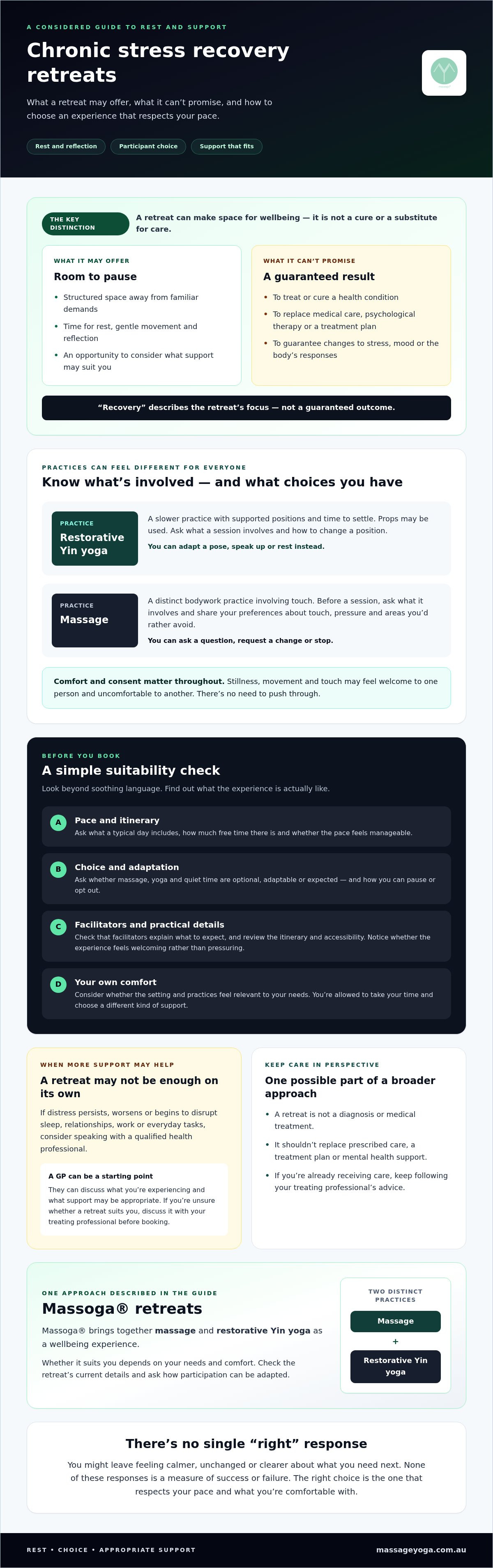
A chronic stress recovery retreat is best understood as a structured opportunity to step back from familiar demands, make room for rest and reflect on what might support your wellbeing. The word “recovery” describes the retreat’s focus, not a guaranteed result. Experiences differ, and a retreat isn’t a diagnosis, psychological therapy or medical treatment.


What does “recovery” mean in a retreat context?


In a retreat setting, recovery can mean having space for rest, gentle movement and personal reflection, with fewer everyday distractions for a time. Practices vary by retreat. Before deciding whether one feels suitable, ask what a typical day includes, how much free time there is and whether participation is optional.


A retreat is a planned wellbeing experience that offers space for rest and reflection, not a promise to treat or cure a health condition.


You might leave feeling calmer, unchanged or with a clearer sense of what you need next. None of these responses is a measure of success or failure. A retreat can offer a supportive setting, but it can’t guarantee changes to stress, mood or the body’s responses.


When might a retreat not be enough on its own?


If distress persists, worsens or begins to disrupt sleep, relationships, work or everyday tasks, consider speaking with a qualified health professional. A GP can be a starting point for discussing what you’re experiencing and what support may be appropriate. Reaching out doesn’t mean you’ve failed to manage on your own. It’s a way to understand your options.


A retreat shouldn’t replace prescribed care, a treatment plan or mental health support. If you’re already receiving care, keep following the advice of your treating professional. Unsure whether a particular retreat is appropriate for you? Discuss it with them before booking, especially if the activities or setting raise concerns.


Think of a retreat as one possible part of a broader approach to wellbeing, not the whole plan. Look beyond soothing language to understand the practices, the level of participant choice and the support available. You’re allowed to take your time, ask direct questions and decide that a different kind of care would feel better for now.


How retreat practices may support rest without promising a cure


A retreat may bring together different practices, each offering a different way to pause and notice what feels comfortable. Restorative Yin yoga involves slower movement and poses held for a period of time, often with props for support. Massage is a separate form of bodywork involving touch. Neither should be presented as a guaranteed treatment for stress or as a way to produce a particular physical response.


People respond differently to stillness, movement and touch. A quiet pose might feel settling for one person and uncomfortable for another. Massage may feel welcome, or it may not feel right for you. There’s no need to push through. Ask how you can modify or pause an activity, and whether you can choose not to take part.


What might restorative Yin yoga involve?


Rather than moving continuously from pose to pose, a restorative Yin practice tends to move slowly, with time to settle into supported positions. Before joining, ask what a session involves, whether props are available and how you can change a position. If a pose doesn’t feel comfortable, speak up, adapt it or rest instead.


How does massage fit into a restorative retreat?


Massage may be included alongside yoga as a distinct bodywork practice. Before a session, ask what it involves and share your preferences about touch, pressure and areas you’d rather avoid. Consent and comfort matter throughout: you can ask a question, request a change or stop. Ask the facilitator how to communicate these choices before the session begins.


Massoga® retreats combine massage with restorative Yin yoga, bringing the two practices together as a wellbeing experience. That description can help you decide whether the approach sounds appealing, but it can’t tell you exactly how you’ll feel. Check the retreat’s current details and ask how participation can be adapted to your needs.


For broader health context, the Mayo Clinic outlines some health risks of chronic stress and healthy coping approaches. This is useful background, not a reason to assume a retreat is right for everyone. If you’re unsure whether movement, stillness or massage suits you, discuss your concerns with your treating health professional before booking.


How to compare chronic stress recovery retreats before choosing


When you’re already feeling depleted, a long itinerary or unclear expectations can make choosing harder. Compare the experience itself, not just its setting or soothing language. A useful retreat description should explain what happens, what’s optional and how you can raise a concern.


Which retreat features matter when you feel depleted?


Start with the pace that feels manageable for you. Consider whether you prefer a group setting or a more individual-centred experience, and whether the practices match your interests. Use this table to compare providers side by side.


Look for clear, specific descriptions rather than bold promises of healing or transformation. A provider should be able to explain the format and what support is available if a session feels uncomfortable or emotionally intense. If key details are missing, ask before you book.


What should you ask a retreat provider before booking?


Keep your questions simple and direct. You could email the provider and ask:


  • Who facilitates the sessions, and what experience do they have with these practices?

  • What does a typical session involve, and how much choice do participants have?

  • Can I adapt or opt out of an activity without pressure?

  • How can I discuss personal needs or touch preferences before taking part in massage?

  • What happens if I feel uncomfortable or need support during a session?

  • Are accommodation, meals and other inclusions clearly listed, and where can I read the cancellation terms?


Notice not only the answers, but how they’re given. Thoughtful, unhurried communication can help you understand whether the format feels right for you. If something remains unclear, pause before committing. You’re choosing an experience that needs to fit your needs, comfort and practical circumstances, not the other way around.


Chronic stress recovery retreat


How to decide whether a recovery retreat feels right for you


Take a breath before you decide. A retreat doesn’t need to be the most intensive option to be worthwhile, and you don’t need to feel completely ready. Use this short check to see whether the experience fits your needs and circumstances.


  1. Your needs: What are you hoping to make space for: quiet, gentle movement, time away from routine or something else?

  2. The format: Does the retreat’s group or individual format feel comfortable? Is the pace manageable for you?

  3. Your comfort: Are the practices appealing, and can you adapt or skip them? If massage is included, are you comfortable with how touch preferences and consent are discussed?

  4. The practical details: Have you checked the itinerary, accommodation, meals, accessibility, travel and cancellation terms with the provider?

  5. Your support: Do you know who to contact with questions, and what support is available if you feel uncomfortable during a session?


Notice how the retreat description lands with you. Does it feel welcoming and clear, or does it create pressure to join every activity, disclose personal experiences or expect a particular outcome? A supportive choice should leave room for your boundaries, preferences and questions.


How can you prepare for a supportive retreat experience?


Before booking, jot down any boundaries, access needs or questions you’d like to raise. If you feel comfortable, share relevant preferences privately with the provider and ask how they’ll be accommodated. You don’t need to follow a detox, give up your phone or talk about personal experiences unless you choose to. Check the expectations rather than assuming.


If you have health, mobility or touch concerns, discuss them with the provider before committing. Ask what the sessions involve and whether modifications are possible. If you’re receiving care or unsure whether a retreat is suitable, speak with your treating health professional as well.


What if a retreat does not feel like the right fit?


It’s okay to choose a different format or postpone booking. A pause isn’t a setback; it can give you space to find an approach that better suits your needs. If you’re interested in individual support, One on One Massoga® Treatments are a separate offering. Check directly whether the format and current availability suit you.


Explore the details at your own pace, and let your questions guide the next step.


What a Massoga® retreat offers as a gentle next step


If you’re considering a chronic stress recovery retreat, Massoga® may be one approach to explore if a combination of massage and restorative Yin yoga feels appealing. These retreats bring the two practices together as a wellbeing experience, not as a promise to treat, heal or cure chronic stress. The value is in understanding what’s offered and deciding whether it suits your preferences, not in expecting a particular result.


How is Massoga® different from a standard yoga class?


Massoga® integrates massage with restorative Yin yoga. It isn’t a drop-in group yoga class or traditional Vinyasa flow. The approach may appeal if you’re looking for a slower, rest-focused experience that includes bodywork as well as yoga. Retreat details can vary, so check the current format rather than assuming what a session or day will involve.


As you consider the combination, think about your comfort with both practices. Ask how participants communicate preferences, whether activities can be adapted and what happens if you’d rather pause or opt out. Clear answers can help you decide whether the experience feels supportive for you.


What should you confirm before expressing interest?


Before making plans, ask the provider to confirm current retreat availability, itinerary, inclusions and accessibility details. Check what participation involves, who facilitates the sessions and how personal needs or questions are discussed. If massage is included, ask how consent and touch preferences are handled, and whether adaptations can be discussed beforehand.


Share only what you’re comfortable sharing. If health or mobility considerations could affect your participation, raise them with the provider before booking. If you’re unsure whether the experience is suitable alongside existing care, speak with your treating health professional. Taking time to check these details is part of choosing well, not a barrier to rest.


There’s no need to decide today. Let the information settle, notice whether the approach feels relevant, and follow up only when you’re ready. For a starting point, you can explore the Massoga® retreat sign-up and review the details at your own pace.


Choose a gentler next step at your own pace


A chronic stress recovery retreat may offer space to pause, reflect and explore supportive practices, but it can’t promise to cure chronic stress or replace care from a health professional. Before choosing, consider the pace, what participation involves and whether you feel comfortable asking for adaptations or support.


Massoga® retreats bring massage together with restorative Yin yoga as a wellbeing experience. Founded and led by Wallis Murphy-Munn, Massoga® also offers trauma-sensitive sessions. As with any retreat, check the current details and consider whether the approach feels right for you.


There’s no need to rush your decision. If the experience sounds aligned with what you’re looking for, explore the details and see what questions arise.


Rest can begin with a small, considered choice. Trust yourself to take the next step when you feel ready.


Frequently Asked Questions


Can a retreat help with chronic stress?


A retreat may offer a supportive setting for rest and reflection, but it can’t promise to treat or cure chronic stress. A chronic stress recovery retreat may give you space to step back from everyday demands and explore gentle practices, though people respond differently. Think of it as one possible part of your wellbeing approach, not a guaranteed solution or substitute for professional care if you need it.


What happens at a chronic stress recovery retreat?


Activities vary between providers, so check the itinerary rather than assuming what’s included. A retreat may provide structured time for rest, reflection and gentle practices such as yoga or massage, if these form part of its programme. Ask how sessions work, whether participation is optional and what quiet time is available. Confirm practical details such as accommodation, meals and accessibility directly before booking.


Is a retreat suitable if I feel overwhelmed or anxious?


It depends on what feels manageable for you and how the retreat is designed. Before booking, ask about the pace, group format, participant choice and what support is available if a session feels uncomfortable. You can discuss health or access needs with the provider, sharing only what you’re comfortable sharing. If anxiety is persistent or worsening, consider speaking with a qualified health professional about whether a retreat feels suitable.


How do I choose the right stress recovery retreat?


Choose by fit, not by the boldness of a retreat’s promises. Compare the pace, practices, group or individual format, opportunities to adapt or opt out, and the clarity of the provider’s answers. Check the itinerary, inclusions, accessibility and cancellation terms directly. A description that feels welcoming, realistic and respectful of your boundaries may be a better sign than language promising dramatic change.


Can massage and Yin yoga be combined at a retreat?


Yes. Massoga® retreats combine massage with restorative Yin yoga as a wellbeing experience. The practices remain distinct, and their combination isn’t a promise to treat chronic stress or produce a particular result. Before expressing interest, ask what participation involves, how touch preferences and consent are handled, and whether you can adapt or skip an activity. Your comfort matters, and you can raise questions before deciding.


Should I seek professional help instead of booking a retreat?


A retreat and professional care serve different purposes, and a retreat shouldn’t replace prescribed care or mental health treatment. If distress persists, worsens or disrupts daily life, consider speaking with a qualified health professional, such as your GP. If you’re already receiving care or aren’t sure whether a retreat is appropriate, discuss it with your treating professional before booking. You can explore wellbeing options alongside appropriate care.


What should I ask before booking a wellness retreat?


Ask who facilitates the sessions, what the format involves and whether activities are optional, adaptable or expected. Confirm the current itinerary, inclusions, accommodation, meals, accessibility and cancellation terms with the provider. If massage is offered, ask how consent and touch preferences are discussed. It’s also reasonable to ask what support is available if you feel uncomfortable or emotionally unsettled during a session. Clear answers can help you make an informed choice.


Comments


Written by Wallis Murphy-Munn

Wallis Murphy-Munn is the founder of Massoga®, a unique practice that combines the therapeutic benefits of massage with the restorative elements of Yin Yoga.


Her hands-on teaching approach has led to deeper relaxation for her students, inspiring the creation of Massoga®.


In addition to her practice, Wallis enjoys writing blog articles to share her insights, advocating for the importance of human touch and simple connections in an increasingly isolated world.

14.png

About

Yoga Retreats

Other Services 

  • Instagram
  • Facebook
  • LinkedIn

We acknowledge the traditional owners of the land in all the regions of the beautiful countries we travel to and experience on retreat. The custodians of Kulin Nation, in the regions of the Woiworung, Boonwurrung and Wathaurong People. The custodians of the Yunbenun of the Wulgurukaba People. We acknowledge their Ancestors past, present and future who nurtured and cared for Country for tens of thousands of years.

© 2025 Massoga® Massage Yoga | Website by Insight Culture

bottom of page