top of page

Choosing a Burnout Recovery Retreat in Australia: The 2026 Buying Guide

Writer: Massoga® Massage Yoga
Massoga® Massage Yoga
1 day ago
9 min read

The most counterintuitive truth about chronic exhaustion is that striving to heal often backfires. When searching for a burnout recovery retreat Australia wide, the last thing your depleted system needs is a rigid itinerary disguised as self-care.


You know the sensation intimately. You sleep for eight hours or take standard annual leave, yet wake with heavy limbs and racing thoughts. Your sympathetic nervous system remains switched on, bracing against daily demands while cellular fatigue lingers in your muscles. It's deeply disheartening when conventional breaks fail to quiet an overstimulated body.


True recovery doesn't require effort; it asks for supported, somatic surrender. This 2026 guide offers a clear framework to help you choose a restorative retreat that genuinely down-regulates your nervous system. Ahead, discover how to identify spaces offering gentle, non-clinical care, allowing you to return home feeling anchored and completely restored.


Table of Contents


Understanding Burnout Recovery: Clinical Rehabilitation vs Restorative Sanctuaries


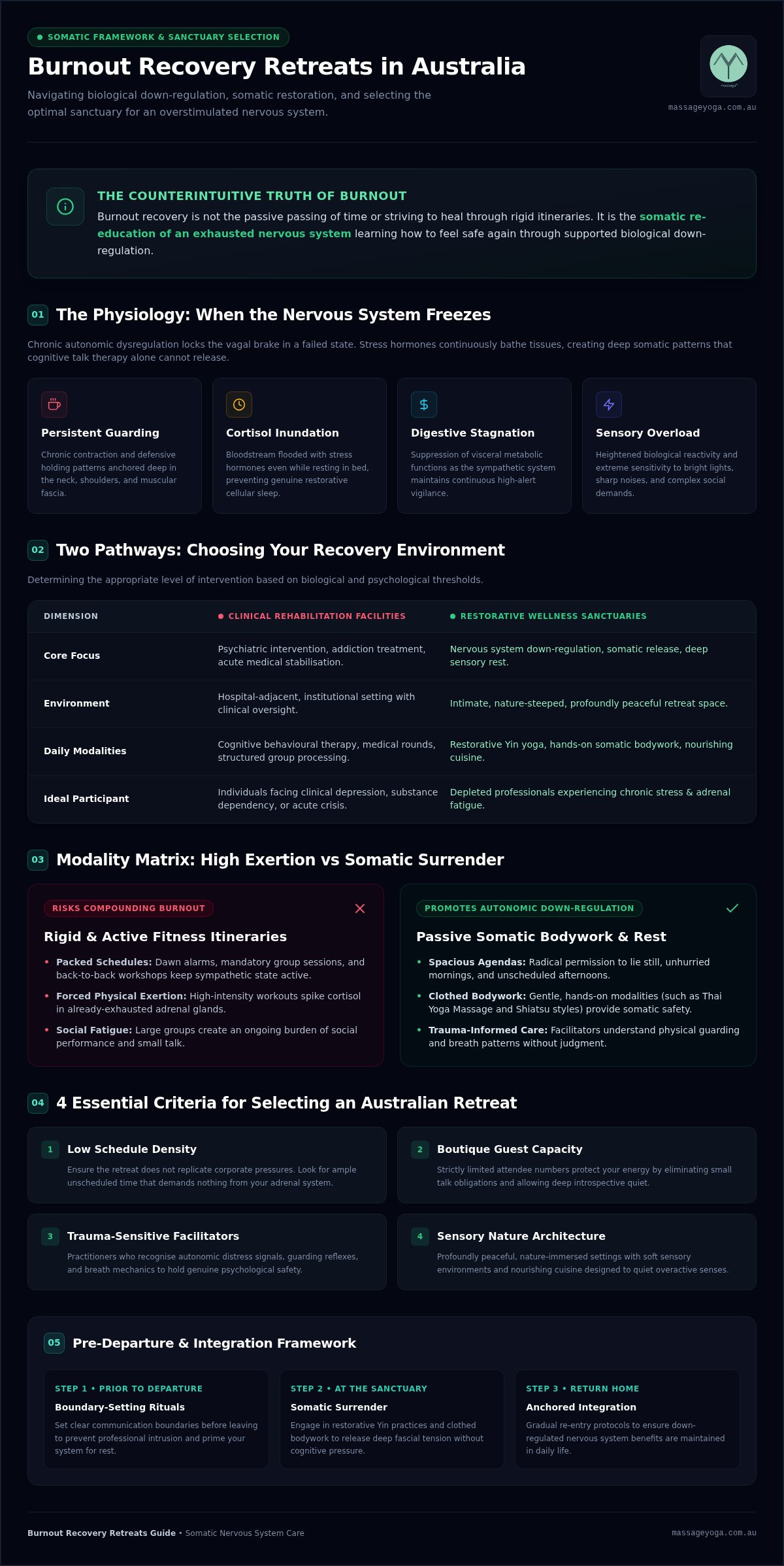
Pause for a moment. Unclench your jaw, soften your shoulders, and exhale completely. What many professionals dismiss as mere mental fatigue is actually a profound biological event. Clinically recognised as occupational burnout, this state reflects chronic autonomic dysregulation. When stress hormones bathe your tissues for months on end, the nervous system shifts into a defensive posture. Standard annual leave cannot undo this state, because quiet environments alone cannot release patterns held deep within your fascia and visceral organs.


Burnout recovery is not merely the passive passing of time; it is the somatic re-education of an exhausted nervous system learning how to feel safe again.


When seeking a burnout recovery retreat Australia provides two distinct pathways: clinical psychiatric care and boutique restorative sanctuaries. Choosing the right environment depends entirely on your current biological and psychological threshold.


The Physiology of Burnout: When the Nervous System Freezes


Chronic overdrive eventually causes your vagal brake to fail. The body remains trapped in high alert, flooding your bloodstream with cortisol even while resting in bed. Physical indicators include persistent neck guarding, digestive stagnation, and an overwhelming sensitivity to bright lights or sharp noises. Because these survival patterns anchor in muscle tissue and breath mechanics, cognitive talk therapies alone cannot fully dissolve them. The physical body must experience tangible proof of safety.


Clinical Care or Restorative Sanctuary: Which Do You Need?


If you experience debilitating clinical symptoms or substance dependency, hospital-based medical care remains an essential first step. However, for professionals navigating profound physical depletion, an intimate burnout recovery retreat Australia wide offers non-clinical somatic relief. Entering a tranquil sanctuary is never an indulgence; it is a proactive medical investment in cellular restoration.


Essential Criteria for Selecting an Australian Burnout Recovery Retreat


Selecting the right sanctuary requires looking past glossy marketing images. When evaluating a burnout recovery retreat Australia wide, your primary benchmark must be biological safety rather than entertainment. Somatic healing asks for an environment that demands nothing from you, inviting your exhausted adrenal system to slowly step down from survival mode. Use the following core criteria to assess whether a retreat truly supports autonomic down-regulation.


The Danger of the Over-Scheduled Wellness Itinerary


Many wellness programs inadvertently mirror the corporate pressure cooker. Itineraries packed with dawn alarms, mandatory group workshops, and back-to-back sessions keep the sympathetic nervous system on high alert. For an exhausted body, forced exertion simply spikes cortisol and compounds deep fatigue. Look closely at schedule density before booking. Prioritise programs that honour unhurried mornings, spacious afternoons, and radical permission to simply lie still and rest.


Boutique Guest Numbers and Trauma-Informed Facilitation


Large group gatherings inevitably demand ongoing social performance, draining a system that desperately needs quiet. Strictly boutique guest numbers protect your energy by removing the burden of small talk. Facilitators must also possess dedicated training in trauma-sensitive somatic support. When practitioners understand physical guarding and breath patterns, they cultivate an atmosphere of absolute psychological safety, letting you surrender tension without feeling watched or judged.


Sensory Architecture and Nourishing Environments


Your nervous system reads its surrounding environment long before your conscious mind registers comfort. Expansive natural beauty, profound acoustic silence, and wholefood nourishment work synergistically to soothe the gut-brain axis. Explore how gentle spaces support deep recovery in our guide to essential restorative retreats.


If your body is asking for unhurried stillness, take a quiet moment to explore a sanctuary created for pure rest.


Comparing Burnout Retreat Modalities: Active Fitness vs Somatic Bodywork


Breathe in slowly. Now let it out completely. Not all retreat environments speak the same biological language. When researching a burnout recovery retreat Australia offers, you will encounter three broad models: active fitness bootcamps, standard spa resorts, and somatic restorative sanctuaries. Fitness programs demand physical output. Day spas offer surface-level pampering. Somatic sanctuaries, however, facilitate autonomic repair through supported floor rest and nervous system recalibration.


Supported passive floor postures create the physiological conditions for deep cellular renewal, proving that genuine recovery occurs only when the body ceases to perform.


Why High-Intensity Retreats Can Worsen Adrenal Exhaustion


Rigorous exercise schedules, morning bootcamps, and vigorous Vinyasa flows demand energy that a depleted body simply does not possess. When your adrenal reserves are empty, pushing through demanding movement forces your endocrine system to squeeze out adrenaline just to stay upright. This biological strain compounds cellular exhaustion. Lasting restoration requires stepping off the treadmill of physical achievement. Grounded, supported stillness must always precede physical conditioning.


The Science of Yin Yoga and Simultaneous Massage


Restorative Yin yoga invites your body to surrender weight completely into bolsters, pillows, and blankets. Holding gentle shapes for extended periods without muscular effort creates slow, therapeutic traction across tight myofascial sheets. When skilled practitioners layer simultaneous, nurturing bodywork over these passive postures, the sensory input directly stimulates the vagus nerve. Cortisol drops, breathing deepens, and your natural relaxation response activates. Discover these restorative principles in our guide on trauma-sensitive movement practices.


Evaluating Hands-On Touch vs Solitary Mindfulness


Sitting alone on a meditation cushion can feel deeply distressing when your nervous system is stuck in fight-or-flight. Without an external anchor, silent meditation often amplifies racing thoughts and physical restlessness. Consent-led, therapeutic touch grounds your awareness back into the present moment. It offers a clear, somatic cue of safety that allows your mind to surrender tension naturally. Learn more about one-on-one touch in our guide to private restorative yoga and massage.


Burnout recovery retreat Australia


Prepare for Your Burnout Recovery Retreat: Practical Guide


Stepping away from relentless professional demands requires deliberate deceleration. Arriving at a burnout recovery retreat Australia wide without mental containment can trigger acute anxiety when stillness suddenly lands. True restoration begins days before you pack your bags. It starts with intentionally softening your daily velocity, giving an overstimulated mind permission to disengage from constant problem-solving.


Create a gentle buffer zone between your working life and your retreat arrival. Schedule no major meetings on your final day, pack unhurriedly, and begin minimising screen exposure forty-eight hours prior to departure. Switching your phone to greyscale mode and instituting an early evening digital curfew prepares your sensory system for deep quiet, reducing the acute withdrawal shock that often accompanies an immediate digital detox.


Creating Space: Pre-Retreat Work and Family Boundaries


Set unambiguous workplace boundaries at least one week prior to departure. Delegate active operational tasks, establish clear out-of-office guidelines, and remove email accounts from your mobile device. At home, lovingly communicate your intention to disconnect completely. Give yourself full permission to lay down the burden of being the default organiser, caretaker, and problem-solver. Protecting your emotional bandwidth beforehand ensures you arrive ready to receive care, rather than managing lingering crises from afar.


Managing Decompression: What to Expect When You Finally Stop


When you abruptly cease striving, your physiology reacts. The first forty-eight hours at a restorative sanctuary often feel disorienting. As circulating adrenaline and cortisol levels decline, you may experience unexpected waves of emotional vulnerability, profound muscle soreness, or restless mental chatter searching for something to manage.


This initial shock is entirely natural. Your nervous system has adapted to constant hypervigilance; biological quiet can initially feel unfamiliar. Trust this settling process rather than fighting it. Allow the heavy fatigue to wash over you without judgement. This profound tiredness is not regression; it is your biology finally exhaling, softening its protective armour, and surrendering to restorative repair.


The Massoga® Difference: Australian Sanctuaries Designed for Nervous System Reset


Lie back. Close your eyes. Feel the weight of gravity holding your spine. Since 2016, somatic practitioner Wallis Murphy-Munn has refined a distinctive modality that redefines what a restorative burnout recovery retreat Australia offers. Massoga® completely rejects fast-paced wellness culture. There are no early dawn alarms, no demanding athletic flows, and there's never an expectation to perform. Instead, our sanctuaries exist solely to foster biological down-regulation through passive surrender and bespoke somatic care.


The Signature Synergy of Restorative Yin and Hands-On Touch


Restorative Yin yoga cradles your body using warm bolsters, soft blankets, and supportive props, completely removing muscular effort. As you settle into prolonged, floor-based stillness, multiple skilled bodyworkers provide intuitive, continuous massage throughout each supported posture. Subtle aromatherapy and grounding acoustic soundscapes gently immerse your senses. This therapeutic integration of deep fascial release and nurturing touch communicates safety directly to the vagus nerve. Held within an intimate cohort, your body finally releases long-held survival tension.


Selecting Your National or Island Sanctuary


True biological recovery asks for an environment where everyday noise dissolves into spacious silence. Massoga® curates boutique retreats nationally, providing a sensory haven away from daily urgency. To step away from persistent exhaustion and immerse yourself in pristine coastal tranquility, explore our dedicated Magnetic Island wellness retreat.


Choosing a Massoga® burnout recovery retreat Australia wide allows you to set down chronic depletion and return to life feeling anchored, nourished, and deeply at peace.


Stepping Into Supported Stillness


Healing from profound exhaustion doesn't demand another rigorous goal. Real cellular recovery unfolds when you stop striving and allow your physical body to be fully supported. By prioritising unhurried schedules, passive fascial release, and nurturing somatic touch, you provide your autonomic nervous system the exact cues of safety it needs to disengage from constant vigilance.


Since 2016, somatic practitioner Wallis Murphy-Munn has guided depleted individuals through this gentle methodology, combining restorative Yin yoga with continuous, multi-therapist bodywork in strictly boutique cohorts. When choosing the right burnout recovery retreat Australia offers, seek sanctuaries where you no longer carry the weight of relentless expectations. Here, you are invited to soften, release chronic muscular guarding, and simply rest.


Give yourself permission to pause. Profound physiological renewal begins the moment you decide to exhale.


Frequently Asked Questions


How is a burnout recovery retreat different from a standard holiday?


A standard holiday changes your geography, but it often preserves daily cognitive demands like scheduling transport, choosing dining options, and navigating unfamiliar places. In contrast, an authentic burnout recovery retreat Australia wide is engineered specifically to eliminate decision fatigue. It provides a structured cocoon of biological safety where restorative bodywork, quiet reflection, and nourishing meals allow your autonomic nervous system to down-regulate completely without any pressure to entertain yourself.


Can a burnout retreat help if I am already physically and mentally exhausted?


Yes, because true restorative retreats are purposefully curated for profound depletion. Unlike active fitness getaways that demand high physical exertion, a restorative sanctuary requires zero stamina. You are invited to spend sessions lying down on supportive bolsters, receiving hands-on touch, and sleeping whenever your body asks for it. The entire retreat experience is structured to meet you in your exhaustion rather than asking you to overcome it.


What happens during a Massoga® restorative retreat session?


During a Massoga® session, you rest quietly in supported Yin yoga postures, cradled by bolsters and blankets. Because there is no active movement or flow, your muscles release completely. As you hold these floor postures, multiple skilled bodyworkers move through the room to provide continuous, consent-led massage. Grounding aromatherapy and gentle ambient soundscapes envelop the space, creating a sensory haven that helps your nervous system safely release stored vigilance.


Do I need prior yoga or meditation experience to attend a burnout retreat?


No prior experience is required. Restorative sanctuaries completely reject demanding postures, flexibility tests, and complex meditation techniques. Every shape is entirely supported by props on the floor, ensuring you never strain or hold your own body weight. Practitioners guide every transition with gentle, attentive care. All you need to bring is a willingness to lie still, soften your breath, and allow yourself to receive deep physical support.


How long does it take for the nervous system to reset during a retreat?


Most individuals need roughly forty-eight hours of unstructured stillness simply to clear circulating stress hormones and move past initial decompression fatigue. By the third or fourth day of a dedicated burnout recovery retreat Australia, the vagal nerve system recalibrates. Heart rate variability improves, sleep architecture deepens, and the mind ceases its racing patterns. This window allows parasympathetic tone to anchor properly before you return home.


Can I claim my Australian burnout recovery retreat on private health insurance?


No, retreats cannot be claimed under private health insurance rebates in Australia. While treatments feature skilled somatic practitioners and remedial bodyworkers, retreat packages operate as holistic, non-clinical wellness experiences rather than accredited medical hospital admissions. However, sole traders and business executives should consult their accountants, as professional development or stress management expenses may occasionally qualify for business tax deductions under Australian Taxation Office guidelines.


What should I pack for an Australian burnout recovery retreat?


Pack for absolute ease, sensory comfort, and zero social pressure. Bring soft, loose clothing made from breathable natural fibres, warm socks, an eye mask, and slip-on footwear. Leave business attire, smartwatches, and demanding reading material behind. Consider packing a personal journal for reflective thoughts and a reusable water bottle. Everything else required for your somatic care, from warm blankets to supportive bolsters, is fully provided at the sanctuary.


Comments


Written by Wallis Murphy-Munn

Wallis Murphy-Munn is the founder of Massoga®, a unique practice that combines the therapeutic benefits of massage with the restorative elements of Yin Yoga.


Her hands-on teaching approach has led to deeper relaxation for her students, inspiring the creation of Massoga®.


In addition to her practice, Wallis enjoys writing blog articles to share her insights, advocating for the importance of human touch and simple connections in an increasingly isolated world.

14.png

About

Yoga Retreats

Other Services 

  • Instagram
  • Facebook
  • LinkedIn

We acknowledge the traditional owners of the land in all the regions of the beautiful countries we travel to and experience on retreat. The custodians of Kulin Nation, in the regions of the Woiworung, Boonwurrung and Wathaurong People. The custodians of the Yunbenun of the Wulgurukaba People. We acknowledge their Ancestors past, present and future who nurtured and cared for Country for tens of thousands of years.

© 2025 Massoga® Massage Yoga | Website by Insight Culture

bottom of page