top of page

Couples Relaxation Retreat Australia: A Gentle Guide to Choosing Shared Rest

Writer: Massoga® Massage Yoga
Massoga® Massage Yoga
Oct 8
12 min read

What if the best couples retreat isn’t the one that asks you to do more together, but the one that gives you room to rest? If you’re exploring a couples relaxation retreat Australia has to offer, you may want more than a beautiful setting and a full schedule. Retreats blend wellness, yoga and relationship activities in different ways, and what feels restorative to one partner may feel uncomfortable or demanding to the other.


A shared escape doesn’t need to become another task to get right. The right fit makes space for both of you to settle in, at a pace and in a style that feel comfortable rather than pressured. This guide explains what relaxation-led retreats can offer and how to compare them by the details that shape your days: movement, bodywork, group activities and time to yourself.


You’ll also discover how Massoga® combines massage and restorative Yin yoga in a slower, sensory approach to rest. Use this guide as a starting point for finding shared downtime that lets you soften, reconnect and simply be together.


Table of Contents


What makes a couples relaxation retreat in Australia genuinely restorative?


A couples relaxation retreat is a shared break centred on rest, ease and time together. Rather than ticking off attractions or filling every hour, the focus is on having space to pause. That might mean a quiet morning, gentle movement or simply enjoying a slower rhythm side by side.


The pace matters. A retreat can look beautiful in photographs yet feel tiring if the days are tightly scheduled or built around demanding activities. A restorative experience leaves room for different comfort levels, including one partner who enjoys movement and another who prefers to take it gently. You don’t need to participate in every activity or turn your time away into a project.


For some couples, a natural setting helps them unwind; others feel more at ease with privacy and familiar comforts. Some retreats may include practices such as naturism, a distinct approach to being with the natural world rather than a standard feature of relaxation travel. If you’re curious about the idea, explore Naturism in Australia and harmony with nature as you decide what feels comfortable for both of you.


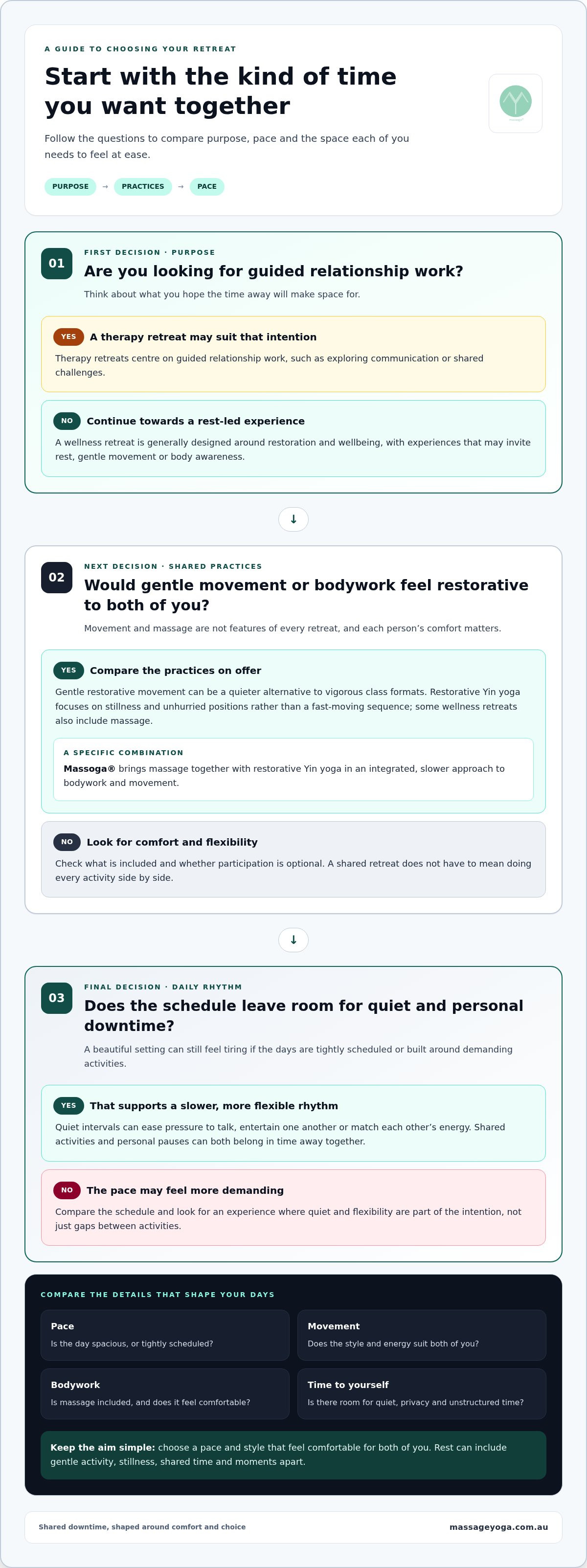
How is a relaxation retreat different from a couples therapy retreat?


A wellness retreat is generally designed around restoration and wellbeing, with experiences that may invite rest, gentle movement or body awareness. A therapy retreat centres on guided relationship work, such as exploring communication or shared challenges. The purpose shapes the pace and structure. Choosing a restful break doesn’t mean your relationship has a problem; you may simply want time together without a therapeutic agenda.


A relaxation retreat makes room for rest; a therapy retreat makes space for guided relationship work. Neither is inherently more meaningful. The right choice depends on what you’re hoping for now. If you want a softer pace, look for an experience where quiet and flexibility are part of the intention, not just gaps between scheduled activities.


As you consider a couples relaxation retreat Australia can offer, think about the small details that would help you both feel at ease: time to wake slowly, the option to enjoy quiet without awkwardness, or shared activities that don’t demand the same ability or energy from each person. These details can tell you more than a list of attractions alone.


What can a couple hope to feel after time away?


There’s no single result to aim for. You might hope to feel calmer, more present or simply glad to have shared unhurried time. A retreat can offer a change of pace and a chance to notice what feels nourishing, but it can’t guarantee a particular emotional or relationship outcome. Let the experience be personal rather than a test of how connected you should feel.


One partner may value gentle activity; the other may find restoration in stillness. Both can belong. Sometimes connection is a long conversation. Sometimes it’s comfortable silence, a slow walk or a shared pause between plans. A genuinely restorative retreat makes room for those different ways of being together, without turning rest into another expectation to meet.


What happens at a couples retreat built around rest?


A retreat centred on rest can have a different rhythm from a holiday planned around constant activity. Instead of moving from one scheduled experience to the next, the day may include gentle movement, bodywork, quiet intervals and time with no particular task attached. These are possibilities, not a checklist: schedules and inclusions vary between retreats.


For two people with different energy levels, balance matters. A shared practice can create a point of connection, while personal downtime lets each partner settle in their own way. One might enjoy a quiet read while the other rests or takes a slow walk. Togetherness doesn’t have to mean doing everything side by side.


A slower pace isn’t empty time; it’s what gives rest room to unfold. Pauses don’t have to be gaps to fill. They can be part of the experience, allowing the day to feel spacious rather than like another itinerary to keep up with.


How can movement and bodywork fit into shared rest?


Gentle, restorative movement can offer a quieter alternative to vigorous class formats. Restorative Yin yoga, for example, gives attention to stillness and unhurried positions rather than a fast-moving sequence. Some wellness retreats also include massage, adding a sensory element of touch and relaxation. The right fit depends on each person’s preferences and comfort; movement and massage aren’t features of every retreat.


Massoga® retreats bring massage together with restorative Yin yoga. These practices form an integrated, slower approach to bodywork and movement. For partners drawn to both, the retreat offers a shared setting for restorative practice, while each person can notice what feels comfortable in their own body. Participation doesn’t need to be a performance.


Why does quiet time matter on a retreat for two?


Quiet intervals give you room to settle without making stillness another activity to complete. They can ease the pressure to talk, entertain one another or match each other’s energy all day. Before choosing a couples relaxation retreat Australia, consider whether its rhythm leaves room for personal space as well as shared experiences. A little time apart can fit naturally into a break taken together.


It may help to agree on a loose expectation beforehand: share some activities, leave other moments open and let each person choose when they need a pause. This isn’t distance from your partner; it’s a way to make the time more comfortable for both of you. Rest can look different from one person to the next.


Notice what helps you unwind: a quiet morning, gentle movement, bodywork or simply fewer decisions. To reflect on what you need, take a moment to consider what rest could mean for you.


Couples relaxation retreat or relationship retreat: which experience suits you?


Start with the reason you want time away. Are you hoping to slow down together, fill your days with new experiences or make dedicated space for relationship conversations? Those intentions point towards different retreat styles. Comparing their purpose, pace and expectations can help you look beyond appealing descriptions and focus on the experience you both want.


These are broad distinctions, not guarantees about every retreat. Formats can overlap, and schedules vary. Use the table as a starting point, then consider how much of the day is planned, whether participation is central and whether there’s room to take things at your own pace.


Choosing rest doesn’t mean choosing shallow connection. A quiet meal, gentle practice or shared stretch of unplanned time can feel meaningful in its own way. Connection doesn’t have to be measured by how much you talk or accomplish together.


When does a relaxation-led retreat make more sense?


This format may suit you if your main wish is to pause, spend time together and ease out of a busy routine. It can be a good fit when one or both of you prefer a lighter schedule, with room to rest between shared experiences. You don’t need to be in crisis or trying to repair your relationship to value a restorative break.


A couples relaxation retreat Australia offers may appeal if the idea of a full itinerary feels tiring before you’ve even packed. Look at the overall rhythm and whether it feels manageable to both of you, rather than choosing by the number of activities on a programme. A retreat that leaves room to breathe may better match your hopes than one that keeps every moment occupied.


When might a more structured couples experience suit you better?


If your priority is intentional communication work, a relationship-focused retreat may be more aligned with what you’re seeking. It’s designed around guided relationship themes rather than rest alone. Wellness experiences aren’t a substitute for relationship counselling or healthcare, and a retreat shouldn’t be treated as clinical support.


An activity-led option may suit you if you both enjoy planned days, trying new things and keeping a lively pace. Before comparing specific features, name your shared purpose and any differences in energy or preference. If one of you wants quiet while the other wants a packed schedule, that conversation can help you find a format that considers both. Choose the intention first, then let the itinerary follow.


Couples relaxation retreat Australia


How to choose a couples retreat in Australia that suits you both


A good choice begins with an honest conversation, not a search for the retreat with the most impressive-sounding programme. Talk about what you each want from the time away, then use those hopes to compare the pace, activities and practical arrangements. A couples relaxation retreat Australia experience should feel workable for both of you, rather than requiring one partner to fit around the other’s ideal holiday.


Which questions should couples answer before choosing?


Before making a shortlist, each share what you’d like more of: quiet, gentle movement, bodywork or unstructured time. Then name any preferences or boundaries around group activities, touch and personal space. You don’t need identical answers. Knowing where they differ helps you choose an experience that respects both partners’ comfort levels.


Use this simple decision process:


  1. Share your reason for going. Is the priority rest, movement, time in nature or a fuller programme of activities?

  2. Compare the pace. Look at how much of each day is scheduled and whether there’s breathing room between activities.

  3. Consider movement and bodywork. Think about which styles feel inviting and what either of you would rather avoid. For context on slower movement, read this guide to restorative Yin yoga and deep rest.

  4. Look for balance. Consider whether the plan allows for shared experiences as well as time to unwind separately.

  5. Review the practical details. Read the schedule, travel requirements, accessibility information and stated inclusions. Make sure the arrangements suit your needs as well as your hopes for the retreat.


Keep your shortlist anchored in purpose, rather than aspirational language alone. Words like “transformative” or “immersive” can sound appealing, but the day-to-day format is what you’ll experience. Read the description together and talk through what you expect before deciding.


How can you make retreat planning feel manageable?


Break planning into manageable parts: dates, travel, schedule and personal needs. Review them together rather than leaving one partner to carry the organising. If a one-on-one format feels more suited to your preferences, this guide to private retreat yoga and massage offers another perspective on making space for rest.


Before you commit, each describe what would help you feel at ease. That might be knowing the shape of the day, having quiet time or understanding how movement is approached. Agreeing on these details can make planning calmer and help you arrive with realistic expectations.


A Massoga® retreat: a gentler way to share restorative time


For couples drawn to a quieter kind of escape, Massoga® offers wellness retreats that bring massage together with restorative Yin yoga. The experience centres on two complementary practices: bodywork and slow, restful movement. Rather than building the day around a fast-paced class, this integrated approach makes space for a more measured, sensory way to engage with rest.


This combination is one option to consider while exploring a couples relaxation retreat Australia experience. Massoga® retreats focus on wellness through massage and restorative Yin yoga, rather than relationship therapy or traditional Vinyasa classes. Couples can share the restorative setting while each person experiences the practices in their own way.


What makes the Massoga® approach distinct?


The defining feature is the integration of massage and restorative Yin yoga. One offers bodywork; the other invites slower movement and stillness. Together, they create a different emphasis from a schedule built around vigorous activity or a succession of classes. There’s room to notice sensation and settle into a gentler rhythm, without treating rest as a task to complete.


If you’re comparing retreat descriptions that use similar wellness language, consider whether this combination itself appeals to you, rather than choosing by a broad label such as “yoga retreat”. Massoga® offers a clear example of a retreat centred on massage and restorative Yin yoga.


How can couples decide whether this style feels right?


Begin with what you both want more of. If gentleness, bodywork and restorative movement sound appealing, this approach may fit your shared intention. If one of you is unsure about touch or stillness, talk about those comfort boundaries before making plans. You don’t need to respond to every practice in the same way, but both partners should feel able to choose what feels comfortable.


It may help to talk through a few simple questions together:


  • Are we both interested in a slower wellness experience?

  • How do we each feel about massage and restorative movement?

  • Would we value shared time even if we experience the practices differently?


There’s no need to turn your answers into a pass-or-fail test. They’re simply a way to make a considered choice. Explore the Massoga® retreat experience at your own pace.


If you’re not ready to decide, you can take a gentle first step towards rest.


Make room for a gentler kind of time together


You don’t need a perfect plan for your time away. Begin with one small conversation: what would help each of you feel more at ease? Let the answer guide your next step, whether you’re considering a couples relaxation retreat Australia experience or simply making space for a slower moment together.


Massoga® also offers personalised one-on-one treatments, including trauma-sensitive sessions, for people who want to explore a more individual approach to rest. These private treatments are tailored to individual needs and can provide another way to approach wellbeing with care for personal comfort.


There’s no need to rush towards a decision. A shared experience can begin with curiosity, an honest conversation and permission for each person to have their own needs. Let rest be an invitation, not another expectation.


May your next step feel calm, considered and right for both of you.


Frequently Asked Questions


Is a couples relaxation retreat the same as couples therapy?


No. A relaxation retreat is centred on wellness and restorative experiences, while couples therapy focuses on relationship concerns with a qualified counsellor or therapist. They serve different purposes, so choose according to what you want from your time away. A wellness retreat shouldn’t be treated as a substitute for counselling or healthcare. A restorative break can still be meaningful if you simply want space to step out of your usual routine together.


Can couples attend a wellness retreat if one partner has never done yoga?


A partner who’s new to yoga can still consider a wellness retreat. The important question is whether the movement style feels comfortable, not whether both people have the same experience. Retreats differ: some feature vigorous sessions, while others include restorative practices such as Yin yoga. Read the description together and consider whether the pace feels approachable. Choose an experience that leaves room for each person to participate comfortably.


How much time should couples set aside for a relaxation retreat?


There’s no single ideal length; it depends on the retreat’s schedule, travel and how much time you need to unwind. Rather than filling every available day, consider whether the plan allows time to settle in and return home without feeling rushed. For a short break, keep travel demands in mind; for a longer stay, look for a rhythm that feels sustainable. Choose time away that suits your circumstances, rather than trying to meet a prescribed duration.


What happens if partners want different levels of activity?


Different preferences don’t automatically rule out a shared retreat. Talk beforehand about which activities you’d both enjoy, which feel optional and when each of you might want downtime. For example, one partner may welcome a movement session while the other prefers quiet time. A schedule with some flexibility can make this difference easier to navigate. Agreeing that you don’t need to share every moment can help each person feel considered.


Is massage included in every couples retreat?


No. Retreat inclusions vary, and massage may be included, offered as an optional extra or not form part of the experience. Read the written description for what the listed price covers and how any bodywork is arranged. Don’t assume that a “spa” or “wellness” label means massage is included, or that a retreat offers a couples massage. Distinguishing between included activities and optional extras makes planning more straightforward.


Can a couples retreat help if we are not having relationship problems?


Yes. You don’t need to be experiencing relationship difficulties to enjoy time away together. A retreat can be a chance to pause from work, household routines or competing commitments and share a different kind of experience. If you’re considering a couples relaxation retreat Australia offers, frame the choice around what you’d like to make room for, such as rest or a slower pace, rather than a problem you need to solve.


What should couples look for in a retreat schedule?


Look beyond the activity list and notice how the day is paced. Check when sessions begin and finish, whether there are open periods between them, and how much participation is expected. Also look for clear descriptions of movement, bodywork and any activities that require particular clothing or equipment. A schedule that shows both planned sessions and unscheduled time makes it easier to picture the experience and decide whether it suits you both.


Comments


Written by Wallis Murphy-Munn

Wallis Murphy-Munn is the founder of Massoga®, a unique practice that combines the therapeutic benefits of massage with the restorative elements of Yin Yoga.


Her hands-on teaching approach has led to deeper relaxation for her students, inspiring the creation of Massoga®.


In addition to her practice, Wallis enjoys writing blog articles to share her insights, advocating for the importance of human touch and simple connections in an increasingly isolated world.

14.png

About

Yoga Retreats

Other Services 

  • Instagram
  • Facebook
  • LinkedIn

We acknowledge the traditional owners of the land in all the regions of the beautiful countries we travel to and experience on retreat. The custodians of Kulin Nation, in the regions of the Woiworung, Boonwurrung and Wathaurong People. The custodians of the Yunbenun of the Wulgurukaba People. We acknowledge their Ancestors past, present and future who nurtured and cared for Country for tens of thousands of years.

© 2025 Massoga® Massage Yoga | Website by Insight Culture

bottom of page