top of page

Yin Yoga for Nervous System Regulation: The 2026 Guide to Deep Recovery

  • Writer: Massoga® Massage Yoga
    Massoga® Massage Yoga
  • 1 hour ago
  • 13 min read

Breathe in. Hold. Now, let it go. In 2026, the most radical act of self-care isn't a high-intensity workout or a complex biohack; it's the profound, deliberate choice to do absolutely nothing. You likely know the heavy weight of being permanently 'on', that exhausting state of hyper-vigilance where sleep feels elusive despite your bones aching for rest. It's an emotional brittleness that makes the smallest demand feel like a mountain. It's a sense of being stretched too thin, where your internal space has narrowed to a fine, fragile line.

We're here to show you a different path. By understanding the profound benefits of massage and yin yoga for nervous system regulation, you can move beyond mere 'relaxation' into a state of deep, cellular recovery. This guide explores how the deliberate stillness of Yin Yoga resets a frazzled system, the science behind vagal tone, and why deep rest has become the most essential wellness trend of the year. Discover how to reclaim your resilience and cultivate a tangible sense of calm that lingers long after you leave the mat.

Table of Contents

Beyond the Burnout: Why Your Nervous System is Permanently 'On'

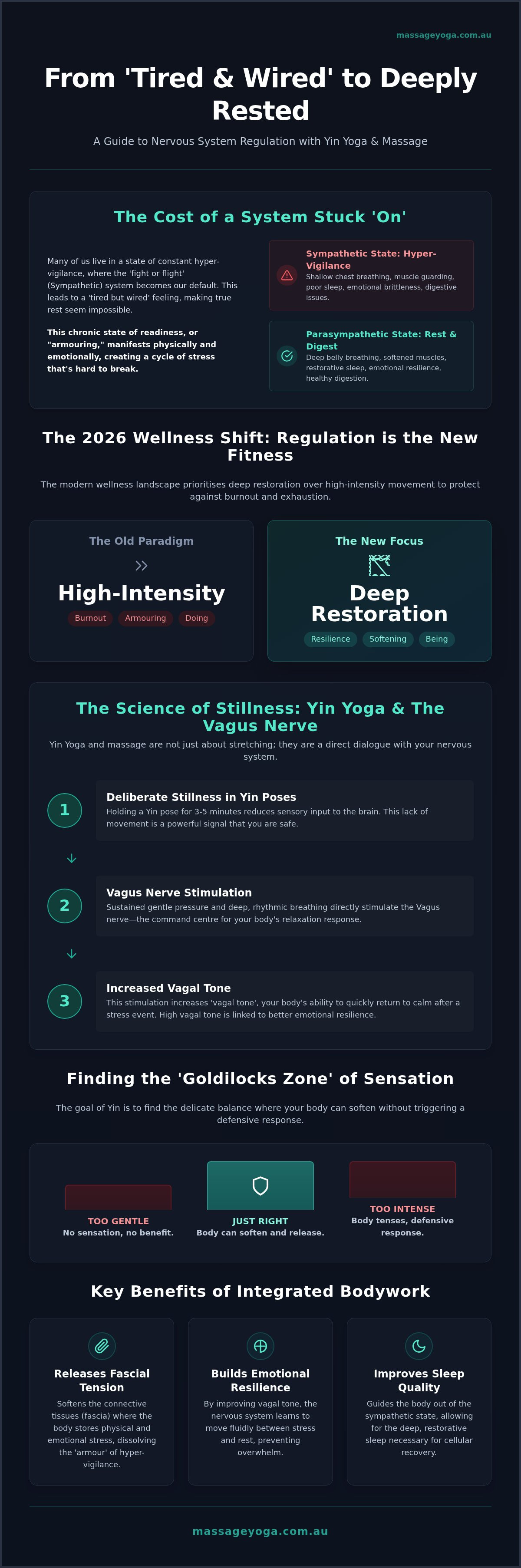
True nervous system regulation is not a permanent state of bliss. Rather, it is the capacity to move with fluid grace between the demands of stress and the sanctuary of rest. For many high-achieving Australians, this internal pendulum has become stuck. You might recognise the 'tired but wired' sensation: a physical exhaustion that coexists with a mind that refuses to quieten. This is the hallmark of a system that has forgotten how to find its way back to centre.

Breathe. Soften. Let go. When you are the woman everyone depends on, your body often adopts a state of perpetual readiness. You might notice your breathing remains shallow, trapped in the upper chest, or that your muscles are constantly 'guarding' against an unseen pressure. This physical armouring is a silent signal that your internal environment is no longer regulated. Understanding the benefits of massage and yin yoga for nervous system health begins with acknowledging this state of chronic survival.

The Cost of Constant Hyper-Vigilance

In a world that prizes productivity, the sympathetic nervous system often becomes our default setting. This fight or flight response is essential for emergencies, yet when it remains active for weeks or months, the cost is profound. Chronic cortisol elevation doesn't just affect your mood; it alters your digestion, your immunity, and your ability to experience deep, restorative sleep. For those living in this state, traditional rest can feel unproductive or even anxiety-inducing. The sudden absence of noise can feel threatening to a brain that is conditioned to scan for the next task or crisis.

Softening the Armour: The Role of Yin Yoga

Yin Yoga offers a radical departure from the doing of daily life. It is a practice of un-patterning the body’s habitual stress responses. While traditional exercise often involves building more armour through muscle engagement, Yin asks for the opposite. It invites a conscious softening of the connective tissues and a surrender of the ego. By remaining in stillness, you begin to dissolve the physical patterns of hyper-vigilance that have settled into your fascia. One of the primary benefits of massage and yin yoga for nervous system recovery is the way these practices work in tandem to signal to the brain that the threat has passed. Yin Yoga acts as a gentle, physiological bridge that guides the body away from the sympathetic drive and back into the healing embrace of the parasympathetic state.

The Science of Stillness: How Yin Yoga Targets the Vagus Nerve

Pause. Settle. Soften. The Vagus nerve is your body's primary information highway. It travels from the brainstem through the neck and down into the abdomen, acting as the command centre for your relaxation response. When you settle into a Yin pose for three to five minutes, you're not just stretching. You're sending a clear, physiological signal of safety to your brain. This sustained pressure and stillness encourage the body to increase its 'vagal tone', a measurable indicator of how quickly your nervous system can return to a state of calm after stress. The benefits of massage and yin yoga for nervous system health are most evident when we look at how they stimulate this specific pathway.

While massage provides external tactile reassurance, Yin Yoga allows you to cultivate that internal safety from within. High vagal tone is associated with better emotional resilience and a more robust ability to handle life's inevitable pressures without becoming overwhelmed. One of the key benefits of massage and yin yoga for nervous system recovery is the way these modalities work together to soothe the Vagus nerve, moving you from a state of high alert into a sanctuary of rest.

The Parasympathetic Shift: Moving into Rest and Digest

Deep, rhythmic breathing is the key that unlocks the relaxation response. By consciously lengthening your exhale, you're able to down-regulate your heart rate and signal to the brain that there's no immediate threat. In the silence of a Yin practice, the deliberate lack of movement reduces the sensory input your brain must process. This allows the mind to stop its constant scanning for danger. Stillness is a skill. It's something we must practise with patience, especially when our modern world demands constant motion.

Fascia and the Somatic Experience of Stress

Your nervous system lives within your connective tissues. Fascia is a complex, sensory-rich web that wraps around every muscle and organ, often acting as a storage site for emotional tension. When we hold a Yin shape, we engage in a form of myofascial release that provides direct neurological feedback to the brain. This process creates physical spaciousness, allowing the 'armour' of stress to dissolve. As the fascia softens, the mind often follows, creating a profound sense of internal space.

If you feel your system is ready for this level of deep, somatic release, you might consider participating in a Massoga® Yoga Retreat to fully immerse yourself in this restorative science.

The 2026 Wellness Shift: Why Regulation is the New Fitness

As we move through 2026, the definition of health is undergoing a quiet but profound revolution. It's no longer just about the strength of your muscles or the speed of your heart rate. Instead, we are seeing a collective shift toward restoration. Australians are increasingly recognising that a regulated nervous system is the essential foundation for every other health goal. Without internal safety, even the best nutrition and exercise can't truly flourish. This movement, often called 'Slow Wellness', is a direct response to the digital fatigue and constant connectivity that has come to define modern life.

Why 'Sweating it Out' Isn't Always the Answer

For many, the instinct when feeling stressed is to push harder. We've been told for years to 'sweat it out' to find relief. However, for a system already teetering on the edge of burnout, high-impact exercise or fast-paced Vinyasa flows can act as further stressors rather than a release. These activities can add more cortisol to an already flooded system, reinforcing the state of hyper-vigilance you are trying to escape. There are times when your body doesn't need a high-intensity push; it needs a soft, sustained exhale. Understanding The Art of Deep Rest: Why a Restorative Yin Yoga Retreat is Essential in 2026 is about knowing when to choose stillness over sweat to protect your long-term vitality.

The Rise of Integrated Bodywork

For individuals who require a more clinical framework to support their physical health, MoveMed provides exercise physiology and hydrotherapy services designed to address the underlying causes of injury while respecting the body's need for nervous system regulation.

Integrated bodywork is the quiet star of the current wellness landscape. It represents a move away from the anonymous studio culture toward a more nurturing, boutique experience. By weaving together the long-held shapes of Yin with hands-on massage, we address the body as a whole, sentient system. This tactile support provides an external anchor of safety, allowing you to surrender more deeply than you might on your own. One of the primary benefits of massage and yin yoga for nervous system health is how this combination addresses both the physical and neurological aspects of stress simultaneously.

Australians are increasingly seeking these one-on-one treatments because they offer a level of personalisation and care that group environments cannot match. The benefits of massage and yin yoga for nervous system recovery are amplified when the experience is tailored to your specific needs, creating a sanctuary where you can finally stop performing and start being. If you wish to explore further advanced manual therapies for nervous system health, you can learn more about Minsu’s Healing Oasis and their specialised approach to restorative care. This is the heart of the regulation trend: a return to the wisdom of the body through time, touch, and deep, intentional stillness.

Benefits of massage and yin yoga for nervous system

Cultivating Internal Safety: A Practical Guide to Yin for Regulation

Regulation is not something you do; it's something you allow. The benefits of massage and yin yoga for nervous system health are most profound when you approach the practice with an attitude of curiosity rather than achievement. To guide your system back to a state of safety, we use a simple five-step framework designed to lower your heart rate and soften your internal environment. First, prepare your sanctuary. Second, enter the shape with a gentle invitation. Third, find your appropriate edge. Fourth, support your body with props. Fifth, commit to the medicine of time.

In this practice, we focus on the Goldilocks Zone of sensation. This is the sweet spot where you feel enough to be present, but not so much that your nervous system feels threatened. If you push too deep, your body will instinctively tighten to protect itself, which is the opposite of what we want. We use trauma-sensitive cues to ensure you always feel in control of your experience. Phrases like "I invite you to" or "if it feels safe" remind your brain that you are the authority of your own body, which is essential for those who often feel hyper-vigilant.

Creating Your Sanctuary for Rest

Your external environment is the first signal to your brain that it's safe to switch off. Dim the lights, ensure the room is warm, and find a space where silence can settle. When you feel permanently on, these sensory cues act as a soft anchor. Using bolsters and blankets provides the tactile reassurance your system craves, mimicking the feeling of being held. For a deeper immersion into this restorative world, you might explore our Luxury Yoga Retreat Australia: The 2026 Guide to Deep Rest to see how a dedicated sanctuary can accelerate your recovery.

The Three Tattvas (Principles) of Yin Yoga

The magic of Yin lies in its three core principles, or Tattvas. The first is finding your appropriate edge; the first sign of resistance where you can still breathe deeply. The second is the resolution to remain still, which is a conscious commitment to your nervous system. Finally, we hold for time. The three to five minute window is where the physical and emotional shifts happen, allowing the fascia to release and the Vagus nerve to settle. This deliberate stillness is where you truly experience the benefits of massage and yin yoga for nervous system regulation.

The Massoga® Method: Deepening Regulation Through Integrated Bodywork

Settle into the realisation that you don't have to navigate the journey to recovery alone. Massoga® Massage Yoga is a soulful synthesis, a unique methodology that weaves the deliberate stillness of Yin Yoga with the nurturing power of tactile massage. By integrating these two disciplines, we create a specialised environment where the body can finally drop its guard. One of the most significant benefits of massage and yin yoga for nervous system recovery is this dual-layered approach. While the Yin poses create the space for internal release, the massage provides a consistent, external signal of safety that allows you to sink deeper than you ever could in a traditional group setting.

One on One Massoga® Treatments offer a level of sanctuary that common group environments cannot provide. When you are the sole focus of a practitioner’s attention, the practice is tailored entirely to your body’s unique patterns of tension and your specific emotional state. This personalised care is vital for those who feel hyper-vigilant, as it removes the need to scan the room or compare your experience to others. Instead, you are invited to turn inward, supported by a professional who acts as a steady anchor for your nervous system.

The Power of Tactile Connection

In a Massoga® session, the touch is never hurried. It is methodical and intentional, designed to meet you exactly where you are. As you hold a Yin shape, professional bodywork is applied to help dissolve the physical armouring that often develops during times of high stress. This tactile connection acts as a powerful down-regulator for the heart rate, deepening the shift into the parasympathetic state. For those with demanding schedules, Massoga® at Home offers a way to bring this restorative sanctuary into your own living space. It provides the same high-end, one-on-one regulation without the need to travel, ensuring your path to rest is as seamless as possible.

Your Journey to Deep Rest

Learning about the benefits of massage and yin yoga for nervous system health is the first step toward reclaiming your internal space. The next is allowing yourself to experience the profound relief of total surrender. Imagine a place where your only responsibility is to breathe and soften. Our Massoga® Yoga Retreat Magnetic Island serves as the ultimate sanctuary for this total reset. Surrounded by the gentle rhythms of nature, you can fully immerse yourself in the process of deep recovery. Whether through a private treatment or a multi-day immersion, the goal is to move beyond the theory of rest and into the tangible, sensory relief of a regulated system. It's time to let the noise of the world fade and listen to the quiet wisdom of your own body.

Reclaiming Your Internal Sanctuary

You now understand that deep rest is a deliberate choice, not a luxury. By nurturing the Vagus nerve and softening the physical armour of the fascia, you create the internal space needed for true resilience. Massoga® remains Australia's original integrated practice, specifically crafted for high-achieving women who need a safe harbour from the relentless noise of modern life. Our specialised trauma-sensitive approach ensures that every moment is an invitation to settle, rather than another task to perform.

Embracing the benefits of massage and yin yoga for nervous system health allows you to finally let go of the hyper-vigilance that has defined your daily existence. It's a journey from being permanently 'on' to finding a steady, calm centre where you can breathe with ease once more. This profound shift into a parasympathetic state is the foundation upon which all your other health and wellness goals are built, offering a level of recovery that purely physical exercise cannot reach. For those who find that this newfound clarity leads to a desire for deeper spiritual insight, a psychic full life reading can be a powerful next step in your personal growth.

The path to deep recovery is waiting for you. Step into the stillness, trust the process of softening, and allow yourself the grace of a true, restorative reset. You've carried the weight for long enough; it's time to let it go.

Frequently Asked Questions

Is Yin Yoga the same as Restorative Yoga for the nervous system?

No, they differ in their physical intention and target tissues. Restorative yoga uses props to support the body completely for total relaxation without any stretch. Yin yoga targets the deeper connective tissues through mild, sustained stress. Both offer benefits of massage and yin yoga for nervous system health by activating the parasympathetic response, but Yin specifically works on the fascia to release long-held physical and emotional tension stored in the body.

How often should I practise Yin Yoga to see results in my stress levels?

Practising just once or twice a week can create a noticeable shift in your ability to manage stress. Consistency is more important than duration. Even a twenty-minute session helps lower your heart rate and settle your mind. Over time, this regular invitation to stillness trains your nervous system to return to a state of calm more efficiently, building lasting emotional resilience and a much greater sense of internal space.

Can Yin Yoga help with chronic insomnia and sleep issues?

Yes, Yin Yoga is an effective tool for addressing sleep disturbances by down-regulating the sympathetic nervous system before bed. By holding poses that stimulate the Vagus nerve, you signal to your brain that it's safe to transition into deep rest. Many Australians find that a regular evening practice helps quiet the 'tired but wired' mind, leading to improved sleep quality and a reduction in middle-of-the-night wakefulness or restlessness.

What if I cannot stay still or find the silence uncomfortable?

It's perfectly normal to feel restless or uneasy when you first begin a stillness practice. If your system is used to constant movement, silence can feel like a threat. We encourage you to start with shorter holds and use props to feel fully supported. The goal isn't to force stillness but to observe the restlessness with compassion. Gradually, your body learns that the silence is a sanctuary rather than a void to be feared.

Do I need special equipment to start practising Yin Yoga for regulation?

You don't need expensive gear, but supportive props are essential for deep nervous system regulation. At home, you can use firm cushions, rolled-up towels, or thick blankets to mimic professional bolsters. These props allow your muscles to fully let go, which is crucial for accessing the deeper fascia. In our Massoga® treatments, we provide everything needed to ensure you feel completely held and safe throughout the entire restorative and healing experience.

Is Yin Yoga safe if I have a history of trauma or high anxiety?

Yes, provided the practice is approached with a trauma-sensitive lens. We prioritise your agency, offering cues that empower you to choose the depth and duration of every shape. If high anxiety makes stillness feel overwhelming, we adjust the environment to ensure you feel grounded. One of the primary benefits of massage and yin yoga for nervous system health is the way it gently rebuilds a sense of internal safety and trust.

Can I practise Yin Yoga if I am not flexible?

Absolutely, Yin Yoga is not about achieving a specific aesthetic shape or touching your toes. It's a functional practice where we target specific areas of the body to release tension in the connective tissues. Whether you're naturally flexible or feel quite stiff, the benefits remain the same. We use props to bring the floor to you, ensuring you find your appropriate edge without straining or triggering a defensive or painful response.

How does massage during Yin Yoga actually work?

Massage acts as an external anchor of safety while you're in a vulnerable, still state. As you hold a Yin pose, the practitioner applies gentle, rhythmic pressure to specific areas of tension. This tactile support accelerates the shift into the parasympathetic nervous system by providing immediate sensory feedback. It helps the brain recognise that the body is safe, allowing for a deeper release of both physical knots and deep-seated emotional stress.


Comments


Written by Wallis Murphy-Munn

Wallis Murphy-Munn is the founder of Massoga®, a unique practice that combines the therapeutic benefits of massage with the restorative elements of Yin Yoga.


Her hands-on teaching approach has led to deeper relaxation for her students, inspiring the creation of Massoga®.


In addition to her practice, Wallis enjoys writing blog articles to share her insights, advocating for the importance of human touch and simple connections in an increasingly isolated world.

14.png

About

Yoga Retreats

  • Instagram
  • Facebook
  • LinkedIn

We acknowledge the traditional owners of the land in all the regions of the beautiful countries we travel to and experience on retreat. The custodians of Kulin Nation, in the regions of the Woiworung, Boonwurrung and Wathaurong People. The custodians of the Yunbenun of the Wulgurukaba People. We acknowledge their Ancestors past, present and future who nurtured and cared for Country for tens of thousands of years.

© 2025 Massoga® Massage Yoga | Website by Insight Culture

bottom of page