top of page

Trauma Sensitive Yoga Bodywork: A Path to Deep Restoration in 2026

  • Writer: Massoga® Massage Yoga
    Massoga® Massage Yoga
  • 1 day ago
  • 12 min read

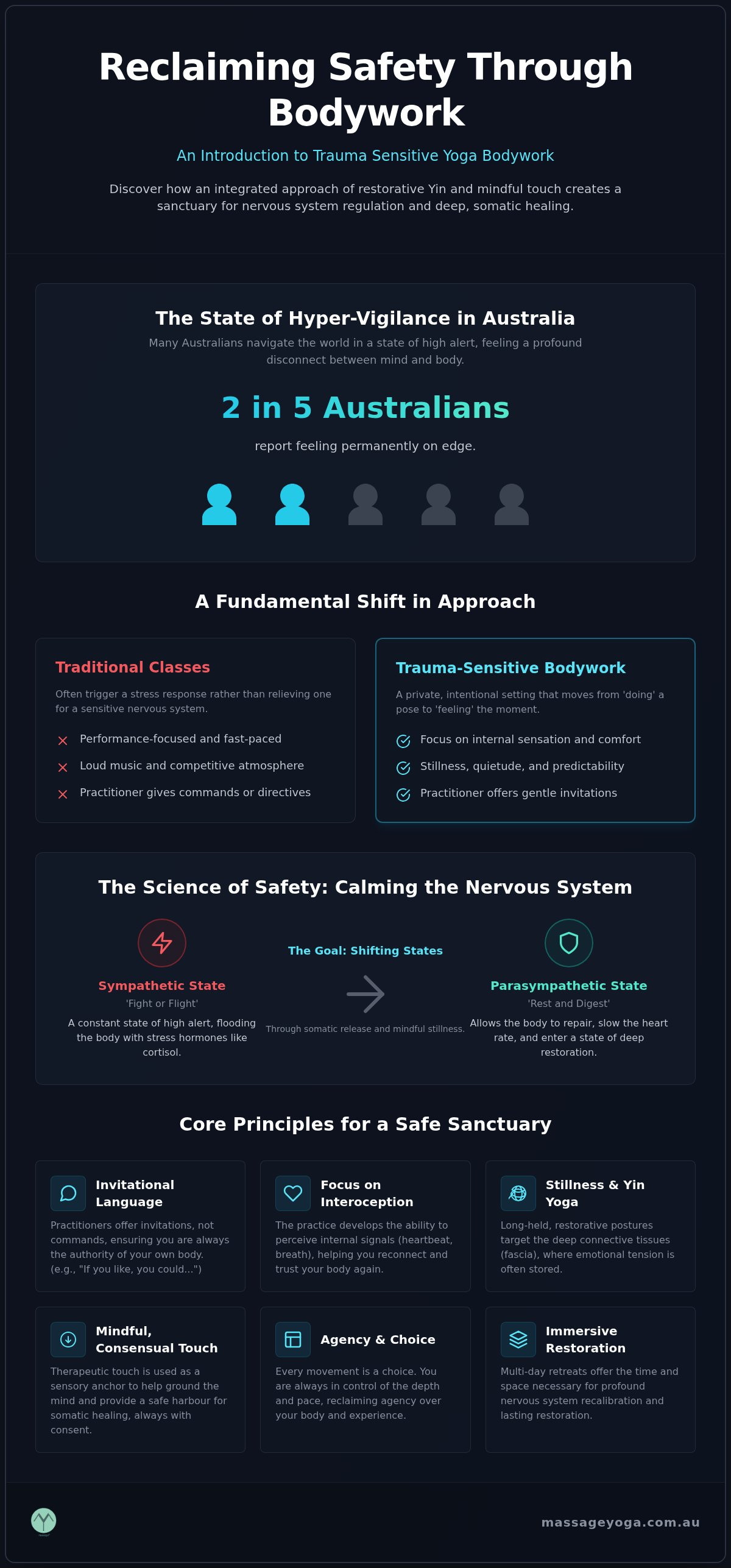
Did you know that two in five Australians currently navigate the world feeling permanently on edge, trapped in a cycle of hyper-vigilance that never seems to end? It’s an exhausting way to live. You might feel a profound disconnection between your mind and your physical self, where the thought of traditional massage feels more like a threat than a treat. This is why trauma sensitive yoga bodywork has become such a vital bridge for those seeking to reclaim their sense of safety and presence.

Softly exhale. By integrating the quietude of restorative Yin with the intentionality of trauma-informed massage, we can begin to organise a space where your nervous system finally feels safe enough to soften. This article explores how this unique combination serves as a sanctuary for somatic healing and nervous system regulation. You’ll discover how mindful, consensual touch and long-held postures work together to facilitate a deep, restorative release that reaches the very core of your being.

Table of Contents

What is Trauma Sensitive Yoga Bodywork?

Imagine a space where you are the sole authority. Where the air feels still and the expectations are non-existent. Trauma sensitive yoga bodywork represents a profound shift in how we approach physical restoration. It is not a fitness regime or a quest for flexibility. Instead, it is a soulful integration of restorative Yin yoga and trauma-informed touch, designed to foster a deep sense of agency. In this practice, the goal isn't to reach your toes; it's to notice the sensation of your breath against your ribs or the gentle pressure of a practitioner's hand on your shoulder. It is an invitation to inhabit your skin again, safely and slowly.

Trauma-sensitive yoga provides the essential framework for this work, focusing on self-regulation and empowerment. By blending these principles with therapeutic bodywork, we create a predictable environment where you can explore sensation without the pressure of performance. You move from the exhausting state of 'doing' a pose to the quiet grace of 'feeling' the moment. This transition is vital for anyone who has felt betrayed by their own body or overwhelmed by the world around them.

The Core Principles of Agency and Choice

In a typical session, the practitioner offers invitations rather than commands. You might hear, "If you like, you could gently tilt your head," rather than a directive to move. This subtle shift in language ensures you remain the expert of your own body. Every movement is a choice; every stillness is an invitation to rest. By maintaining this level of predictability, the practice helps quiet the hyper-vigilant mind. It allows for a genuine sensory experience that prioritises your internal comfort over external form. You are always in control of the depth and pace of the session.

Moving Beyond Traditional Yoga Classes

Many people find that traditional, fast-paced Vinyasa or gym-based yoga can be overwhelming for a sensitive nervous system. The loud music, the rapid transitions, and the competitive atmosphere often trigger a stress response rather than relieving one. Massoga® deliberately moves away from this model. We don't offer drop-in group classes because we believe true healing requires a more intentional, private setting. By prioritising stillness over flow, we allow the nervous system to settle into a state of deep presence. It’s about creating a soft exhale for the soul, away from the busyness of daily life and the noise of the crowd. This specialised methodology ensures that your journey toward restoration is never rushed or forced.

The Science of Safety: Calming the Nervous System

Softly exhale. When you live with hyper-vigilance, your body is essentially stuck in a loop of high alert. This constant state of 'fight or flight' is managed by the sympathetic nervous system, which is vital for survival but exhausting when it never turns off. Trauma sensitive yoga bodywork seeks to invite the opposite state: the parasympathetic response. This is the 'rest and digest' mode where the body can finally begin to repair itself. Many people ask, What is somatic therapy? In essence, it is a way of working with the body to release the physiological remnants of stress that talk therapy alone might not reach.

The concept that 'the body keeps the score' is more than just a metaphor; it is a physiological reality. Trauma is often stored in the physical tissues, manifesting as chronic tightness or a vague sense of unease that doesn't go away with a standard massage. Through trauma sensitive yoga bodywork, we use stillness as a tool to bypass the mind's defences and speak directly to the connective tissues. This process allows the nervous system to recognise that the immediate threat has passed, creating a sanctuary where deep restoration can finally occur.

Nervous System Regulation and Deep Rest

Your adrenal system needs a break. Chronic stress floods the body with cortisol, keeping you ready for a threat that isn't there. Deep rest acts as a manual reset for these internal systems, allowing the heart rate to slow and the breath to deepen. Interoception is the ability to perceive and interpret internal bodily signals, such as the beat of your heart or the sensation of your breath, and it plays a critical role in healing by helping you reconnect with your physical self in a safe, non-judgmental way. By focusing on these internal cues, you learn to trust your body again.

Somatic Release Through Mindful Stillness

Chronic tension is often a form of emotional holding. When we experience stress, our muscles contract as a shield. Over time, this becomes our default setting, leading to a feeling of being 'armoured' against the world. Yin yoga specifically targets the fascia, the intricate web of connective tissue that wraps around every muscle and organ. By holding postures for several minutes in a supportive environment, we encourage these defensive patterns to 'unwind'. This slow process allows for a genuine release of stored energy, moving you from a state of bracing to a state of being. If you feel ready to explore this quiet path to recovery, you might like to begin your journey into deep rest here.

Why Integrated Yin and Massage is the Key to Somatic Release

While many wellness practices offer yoga or massage as separate paths, the true alchemy of somatic release lies in their integration. Massoga® has refined a specialised methodology of trauma sensitive yoga bodywork where restorative Yin yoga postures are combined with mindful, hands-on bodywork. This approach isn't about deep tissue manipulation that triggers a pain response; it’s about a gentle, nurturing touch that acts as an external anchor for the nervous system. When you are held in a supported Yin shape, your body is already beginning to soften, making the addition of massage a tool for deeper surrender rather than a source of anxiety. The Science of Trauma-Sensitive Yoga supports the idea that these body-based interventions are crucial for those recovering from chronic stress, as they help rebuild the connection between mind and physical sensation. This synergy allows for a more profound release than either practice could achieve in isolation.

The Power of Mindful Touch in Healing

Traditional remedial massage often focuses on 'fixing' a specific physical ailment, which can sometimes feel clinical or even invasive for a sensitive nervous system. In contrast, trauma-informed massage prioritises sensory immersion and absolute comfort. The touch is always predictable and consensual, following a rhythm that encourages the body to let go of its defensive armour. By integrating this touch into the stillness of Yin, we create a sanctuary where you can explore the depths of your internal landscape without feeling overwhelmed. It is a transition from being 'worked on' to being 'cared for', allowing your heart rate to steady and your mind to find a quiet harbour.

The Massoga® Methodology

The Massoga® methodology is built around one-on-one sessions that are carefully tailored to your individual window of tolerance. We use an abundance of props, such as bolsters, blankets, and blocks, to ensure you feel fully held and supported in every posture. This physical support allows the muscles to release their grip, providing a safe foundation for the practitioner to apply gentle massage. You can learn how Massoga® combines Yin and massage to create this unique path to wellness. By honouring your boundaries and moving at your pace, we ensure that the experience remains restorative, grounded, and profoundly healing. This intentional approach makes trauma sensitive yoga bodywork a leader in the field of restorative wellness.

Trauma sensitive yoga bodywork

Choosing a Trauma Sensitive Practitioner in Australia

Finding the right guide for your journey into trauma sensitive yoga bodywork is a deeply personal process. It requires more than just checking a list of qualifications; it’s about finding a practitioner who creates an immediate sense of safety and professional warmth. In Australia, where the yoga industry remains largely unregulated, you must look for those who prioritise invitational language. This means every suggestion is framed as a choice, such as "if you like" or "when you are ready," rather than a directive command. This subtle shift in communication is essential for returning agency to you, the expert of your own body.

The environment itself should feel like a soft exhale. Look for a space that is quiet, private, and entirely free from the distractions of a busy gym or high-traffic studio. A dedicated sanctuary allows your nervous system to begin the process of softening long before the actual session starts. An initial consultation is a non-negotiable part of this process. It is your opportunity to discuss your boundaries, your history of touch, and your specific needs. A truly trauma-informed practitioner will welcome these questions, seeing them as a vital foundation for building the trust necessary for somatic healing.

Questions to Ask Your Practitioner

Before you commit to a session, it is helpful to have a brief conversation to gauge the practitioner’s approach. You might consider asking:

  • "How do you handle physical touch and consent?" A safe practitioner will explain their process for checking in throughout the session and how you can withdraw consent at any time.

  • "What is your approach to nervous system regulation?" They should be able to explain how they monitor for signs of overwhelm and what tools they use to help you stay grounded.

  • "Can the session be adapted if I feel overwhelmed?" Flexibility is key. The session must be able to pivot or pause based on your internal state in the moment.

The Value of Private vs. Group Settings

While group classes are common, one-on-one sessions are often the safest starting point for those navigating hyper-vigilance or anxiety about touch. In a private setting, the practitioner can co-regulate with you, adjusting their presence and pace to match your needs. This level of dedicated attention allows for a bespoke sensory environment. Every detail, from the lighting and temperature to the choice of sound or silence, can be customised to ensure you feel fully supported. This intentionality is what distinguishes a high-end, trauma-sensitive experience from a standard wellness service, providing the space needed for a truly restorative release.

Immersive Restoration: The Luxury Retreat Experience

True restoration often requires more than a single hour of stillness. While individual sessions provide a vital foundation, a multi-day immersion allows for a deeper, more sustained recalibration of the nervous system. When you step away from the relentless pace of daily life, you give your body permission to move beyond the temporary relief of a single practice. In a retreat setting, the benefits of trauma sensitive yoga bodywork are amplified by the luxury of time and the absence of external demands. You aren't just visiting a state of rest; you are living within it, allowing your adrenal system to settle into a new, quieter baseline.

The role of the environment cannot be understated. Healing is as much about where you are as what you do. Scenic, natural landscapes act as a silent co-facilitator in the healing process, providing a sensory backdrop that feels inherently safe and expansive. Whether it’s the ancient energy of the Otways or the sun-drenched shores of a tropical island, nature encourages the transition from hyper-vigilance to presence. By combining private, one-on-one treatments with the luxury of silence and space, we create a sanctuary where the mind can finally stop scanning for threats and start focusing on the subtle sensations of recovery.

A Sanctuary of Rest on Magnetic Island

Magnetic Island holds a unique healing energy, where the rhythm of the ocean mirrors the pace of a slow, deep breath. The Massoga® Yoga Retreat Magnetic Island is designed to be a safe harbour for those seeking profound emotional release. Every aspect of the retreat structure prioritises your emotional safety, ensuring you have the privacy needed to process your experience without the pressure of a group dynamic. You are invited to explore our Magnetic Island sanctuary and discover how a dedicated space for rest can transform your path to wellness. It is an opportunity to immerse yourself in a specialised methodology that honours your individual journey.

Taking the First Step Toward Deep Recovery

Honouring your need for professional support is a powerful act of self-care. It’s an acknowledgement that your well-being deserves more than just a quick fix. Whether you choose a private trauma-sensitive session or an immersive retreat experience, you are taking a significant step toward reclaiming your sense of self. Our methodology is here to guide you, offering a gentle, expert hand as you navigate the journey back to your body. You can book your Massoga® experience today and begin the process of deep, lasting restoration. Softly exhale; your path to recovery is ready when you are.

Embracing the Path to Somatic Stillness

Softly exhale. You now understand that healing isn't a destination reached through sheer effort; it’s a state of being invited through absolute safety. By prioritising agency and the science of the nervous system, trauma sensitive yoga bodywork offers a vital bridge back to your physical self. Whether you seek the quiet sanctuary of a one-on-one session or the immersive recalibration of a luxury retreat in the Otways or on Magnetic Island, the focus remains entirely on your internal comfort and sensory well-being.

Since 2016, Wallis Murphy-Munn has refined the specialised Trauma Sensitive Massoga® methodology to support those navigating the exhaustion of hyper-vigilance. This integrated approach ensures that every movement is an invitation and every touch is predictable. You don't have to carry the weight of chronic tension alone. There is a path to restoration that honours your boundaries and moves at your unique pace.

Your body is ready to let go of the patterns that no longer serve you. Trust in the quiet process of softening, and allow yourself the space to be truly seen and cared for in a sanctuary of rest.

Frequently Asked Questions

What exactly is trauma sensitive yoga bodywork?

Trauma sensitive yoga bodywork is an integrated approach that combines restorative Yin yoga with trauma-informed massage. It focuses on agency, safety, and nervous system regulation. Unlike traditional yoga, it uses invitational language and prioritises internal sensation over physical form. This specialised Massoga® methodology creates a sanctuary where the body can release stored tension without being overwhelmed. It helps you transition from the busyness of daily life into a state of deep presence and surrender.

Do I need to talk about my past trauma during a session?

You don't need to share any details of your history unless you choose to. The focus is on your current physical and emotional state in the moment. We treat the session as a somatic experience, meaning we work directly with the nervous system and physical tissues. Your privacy is paramount, and the practitioner is there to support your present-moment safety. This approach respects your boundaries and avoids the need for cognitive processing of past events.

How does trauma sensitive massage differ from a regular massage?

Trauma sensitive massage prioritises predictability, consent, and your individual window of tolerance. In a regular remedial setting, the goal is often to 'fix' a muscle, which can feel clinical or invasive. In our trauma sensitive yoga bodywork sessions, the touch is always consensual and nurturing. It acts as a grounding anchor while you are supported in restorative poses, ensuring the experience remains calming rather than triggering for a sensitive or hyper-vigilant nervous system.

Is this suitable for someone who has never done yoga before?

It is perfectly suitable for beginners as there are no complex movements or fast-paced flows. Since we exclude traditional Vinyasa, you don't need any prior experience or flexibility. We use an abundance of props like bolsters and blankets to ensure your body is fully supported in every shape. The focus is entirely on your comfort and your ability to settle into a state of deep rest, presence, and somatic healing.

Can I choose not to be touched during a Massoga® session?

You have full agency over your experience and can choose to have a touch-free session at any time. Every part of the Massoga® methodology is based on your consent and choice. Before we begin, we discuss your boundaries and preferences. If you prefer to focus solely on the restorative Yin yoga without the integrated bodywork, we will honour that choice completely to ensure you feel safe and in total control.

What should I wear to a trauma sensitive yoga session?

Wear soft, comfortable clothing that allows you to move freely and stay warm. Since restorative Yin involves long-held postures and stillness, your body temperature may drop, so we recommend layers like leggings, tracksuits, or a long-sleeved top. Soft socks are also a wonderful addition. The goal is to feel cosy and unencumbered, allowing you to transition easily into a state of deep surrender and physical ease while you rest.

How many sessions will I need to feel a difference in my nervous system?

Many people feel an immediate sense of relief and a soft exhale after their very first session. However, for lasting nervous system recalibration, a consistent practice or an immersive retreat is often most effective. Every individual is different, and the number of sessions required depends on your specific needs. We recommend starting with a one-on-one treatment to see how your body responds to the specialised Massoga® approach and the depth of the experience.

Why is Yin yoga specifically used for trauma recovery?

Yin yoga specifically targets the fascia and connective tissues where chronic tension and emotional stress are often stored. By holding gentle, supported shapes for several minutes, we encourage the body's defensive patterns to slowly unwind. This stillness provides the space needed for interoception, helping you reconnect with internal sensations in a safe way. It moves you away from a state of 'doing' and into a restorative state of 'being' and deep recovery.


Comments


Written by Wallis Murphy-Munn

Wallis Murphy-Munn is the founder of Massoga®, a unique practice that combines the therapeutic benefits of massage with the restorative elements of Yin Yoga.


Her hands-on teaching approach has led to deeper relaxation for her students, inspiring the creation of Massoga®.


In addition to her practice, Wallis enjoys writing blog articles to share her insights, advocating for the importance of human touch and simple connections in an increasingly isolated world.

14.png

About

Yoga Retreats

Other Services 

  • Instagram
  • Facebook
  • LinkedIn

We acknowledge the traditional owners of the land in all the regions of the beautiful countries we travel to and experience on retreat. The custodians of Kulin Nation, in the regions of the Woiworung, Boonwurrung and Wathaurong People. The custodians of the Yunbenun of the Wulgurukaba People. We acknowledge their Ancestors past, present and future who nurtured and cared for Country for tens of thousands of years.

© 2025 Massoga® Massage Yoga | Website by Insight Culture

bottom of page