top of page

Trauma-Informed Massage Therapy: A Gentle Path to Deep Restoration

  • Writer: Massoga® Massage Yoga
    Massoga® Massage Yoga
  • Aug 23
  • 12 min read

Pause. Soften your shoulders. What if the very touch your body craves is the same thing that triggers a sense of hyper-vigilance? For many people living with the weight of "stuck" emotional exhaustion, the idea of trauma informed massage therapy feels like a delicate paradox. You likely recognise that feeling of being unable to switch off, where your breath remains shallow and your muscles stay braced, even in a quiet room. It's a heavy burden to carry when your nervous system feels constantly on guard, making the prospect of being touched by a stranger feel more like a challenge than a comfort.

This is a space where your safety is the only priority. You'll discover how trauma-sensitive bodywork returns agency to your hands, creating a collaborative sanctuary rather than a standard treatment. We'll explore the specific ways this nurturing approach prioritises your boundaries and honours your internal state to facilitate profound nervous system recovery. By understanding the methodology behind this gentle path, you can begin to transition from the busyness of survival into a state of deep, restorative presence and relief.

Table of Contents

What is Trauma-Informed Massage Therapy?

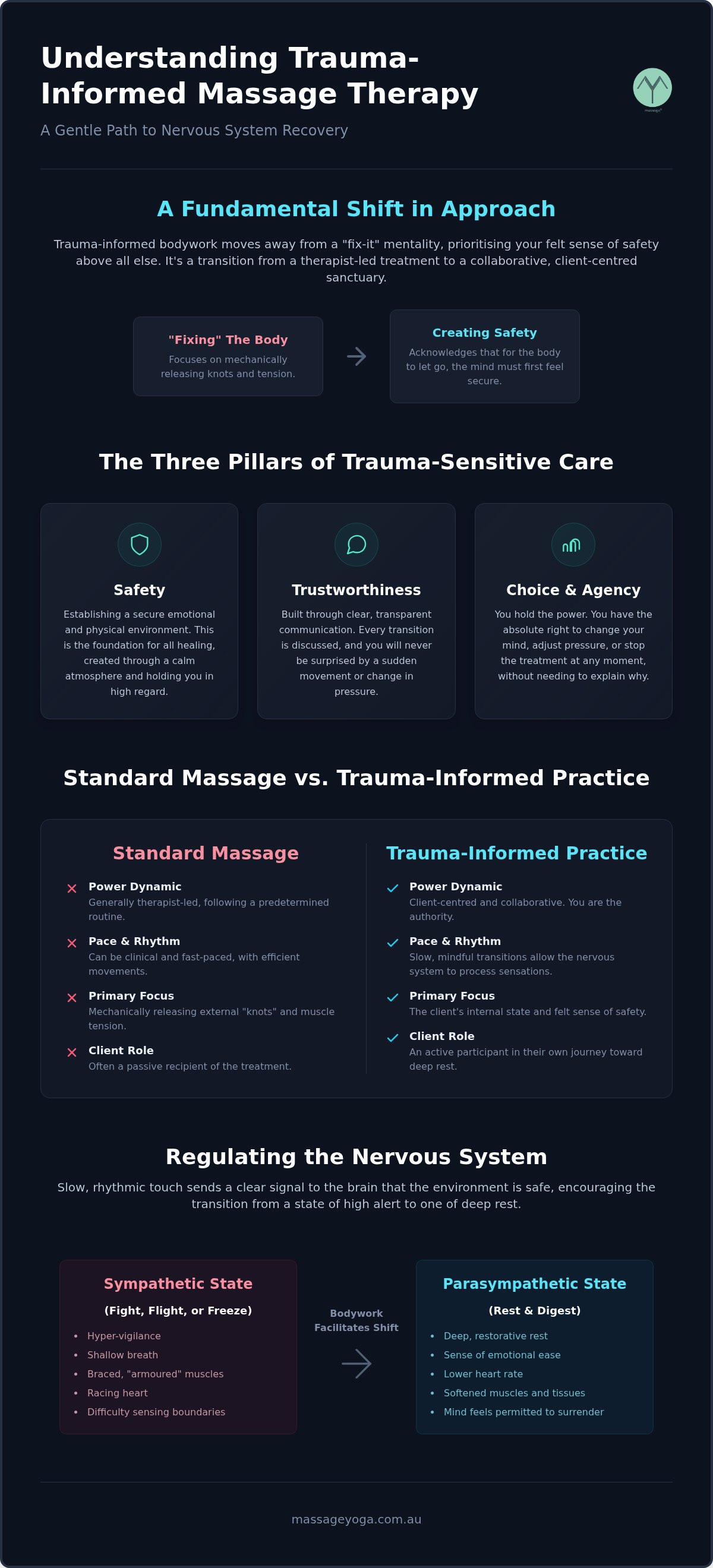
Trauma informed massage therapy is not simply a set of techniques; it is an entirely different philosophy of being with the body. It begins with the profound realisation that many of us carry the imprints of past stress and overwhelming experiences within our very tissues. While traditional remedial massage often focuses on a "fix-it" mentality, aiming to mechanically release knots and tension, this specialised approach prioritises your felt sense of safety above all else. It acknowledges that for a body to truly let go, the mind must first feel secure. This practice is rooted in the broader principles of What is Trauma-Informed Care?, adapting those psychological safety nets to the physical world of massage. Essentially, trauma-informed massage is a practice of invitational touch that honours the body’s boundaries, offering a sanctuary where you are the ultimate authority over your own physical experience.

The Core Pillars of Trauma-Sensitive Care

To create a truly restorative environment, we lean on three essential pillars that transform a simple appointment into a soulful experience. Safety is our foundation. This isn't just about a locked door; it's about the emotional atmosphere, the soft lighting, and the way you are held in high regard from the moment you arrive. Trustworthiness follows, built through clear, transparent communication. You'll never be surprised by a sudden movement or a change in pressure; every transition is discussed before it occurs. Finally, Choice and Agency form the heart of the session. You hold the power. You have the absolute right to change your mind, adjust the pressure, or stop the treatment at any moment without needing to explain or justify your decision.

Standard Massage vs. Trauma-Informed Practice

In many traditional settings, the therapist follows a predetermined routine, moving through muscle groups with a clinical, sometimes fast-paced efficiency. Trauma-informed practice is entirely bespoke. The power dynamic shifts from being "therapist-led" to "client-centred". Rather than a practitioner performing a service upon you, we work in collaboration with you. We replace vigorous manipulation with slow, mindful transitions. These pauses allow your nervous system time to process each sensation, ensuring you never feel overwhelmed. It's a move from being a passive recipient to becoming an active participant in your own journey toward deep rest. We prioritise the internal state over the external "knot", recognising that true physical release only happens when the spirit feels at home.

How Trauma-Sensitive Bodywork Regulates the Nervous System

Our bodies are masterful at protection. When we face overwhelming stress, that energy often becomes trapped in our soft tissues, manifesting as a persistent "freeze" or "fawn" response. In a freeze state, the muscles may feel perpetually tight or "armoured", while a fawn response might show up as a difficulty in sensing one's own physical boundaries or needs. Trauma informed massage therapy specifically addresses these physiological imprints. By employing slow, rhythmic touch, the practitioner sends a clear, consistent signal to your brain that your current environment is safe and predictable. This contact encourages the nervous system to begin the vital transition from the sympathetic state of fight or flight into the parasympathetic state of rest and digest. This shift is the foundation of recovery. Additionally, practices like trauma sensitive yoga Australia offer a complementary path, supporting long-term emotional recovery by teaching the body how to find safety in stillness once more.

The Role of the Parasympathetic Nervous System

Deep, restorative rest remains out of reach when the body feels it must stay "on guard" against perceived threats. If your heart is racing and your breath is shallow, your muscles stay braced for impact, even when you're lying on a massage table. Mindful touch acts as a gentle anchor, helping to lower the heart rate and quiet the background noise of a busy mind. As the physical tension in your muscles and connective tissues begins to soften, a sense of emotional ease often follows. It's a beautiful, reciprocal process; as the body settles, the mind finally feels permitted to surrender its vigil and enter a state of true surrender.

Integrated Bodywork and the Science of Stillness

Profound restoration often thrives in the space where different healing traditions meet. By combining the stillness of restorative Yin yoga with therapeutic massage, we can deepen the body's relaxation response significantly. In Yin yoga, poses are held for extended periods, often between three to five minutes. This duration is crucial because it allows the fascia, the intricate web of connective tissue that encases our muscles, to release slowly and naturally without any sense of force or urgency. There is a unique, powerful synergy in being "held" by supportive bolsters and blankets in a pose while receiving mindful, therapeutic touch. It creates a secure, sensory container where you can let go entirely, knowing every part of your experience is honoured and protected. For those seeking a guided path back to themselves, discovering a dedicated space for deep nervous system restoration can be a transformative step in reclaiming your sense of peace.

What to Expect in a Trauma-Informed Session

Stepping into a session of trauma informed massage therapy feels less like a standard appointment and more like a gentle return to yourself. It's a transition designed to lower your heart rate before the first touch even occurs. Unlike a typical spa visit where you might be rushed onto a table, this experience begins with a slow, spacious consultation. We take the time to settle into the room together, ensuring you feel heard and held in a space that is entirely your own. Here, the practitioner acts as a nurturing guide, facilitating a collaborative environment where your comfort dictates the pace of the journey.

Step 1: The Invitational Consultation

This first step is where we establish the map of your session. We'll discuss "no-go" zones and identify the areas where you feel most comfortable receiving touch. It's a time to set a clear intention, whether that's seeking relief from physical bracing, finding deep rest, or simply allowing for emotional release. Crucially, we establish a non-verbal signal; a simple hand gesture or a specific breath that tells me to stop or pause immediately. This ensures you never have to search for words if you feel overwhelmed. You aren't just a client; you're the navigator of this experience, and your agency is the most important tool in the room.

Step 2: Creating the Sensory Sanctuary

Your environment should never be a source of stress. We custom-build a sensory sanctuary tailored to your specific needs to avoid any sense of overwhelm. You have full choice over the lighting, the music, and even the scent of the room, with scent-free options always available for those sensitive to fragrance. We use bolsters, blankets, and weighted props to provide a profound sense of physical support, ensuring you feel "cloaked" and secure throughout the treatment. Whether you choose to remain fully clothed or use traditional draping, the goal is for you to feel completely protected and encased in a cocoon of safety.

Throughout the session, I use invitational language to maintain a constant, gentle dialogue with your nervous system. Instead of simply moving to a new area, I might ask, "Would you like me to work on your shoulders now?" or "How does this pressure feel in your lower back?" These small questions return power to you in every moment. If your mind begins to wander or you feel a sense of detachment, we incorporate grounding techniques to bring you back. This might involve focusing on the weight of your body against the table or noticing the rhythm of your own breath. The true beauty of trauma informed massage therapy lies in this ability to keep you present and centred, allowing recovery to take place not just in your muscles, but in your entire being.

Trauma informed massage therapy

Why Choice and Agency are Vital for Recovery

Trauma is fundamentally an experience of powerlessness. It's a theft of autonomy that leaves the body feeling like a territory that has been either invaded or entirely ignored. Within the practice of trauma informed massage therapy, our primary aim is to return the keys of that territory to you. Every choice you make, from the weight of the blankets to the level of pressure applied, serves as a gentle reclamation of your sense of self. The right to say "no" or to change your mind at any second isn't just a clinical policy; it's the most vital tool for healing in the room. It shifts the experience from something being done to you into a process that you are actively directing.

This sense of control extends into every facet of the work. Even during the subtle movements of yoga, hands-on adjustments can be modified or avoided altogether based on how your nervous system feels on any given day. There's no expectation to perform. A luxury international yoga retreat can provide the expansive, quiet space needed to practice this level of personal agency, away from the noise of daily obligations. It offers a unique opportunity to listen to your own needs without distraction.

The Difference Between "Doing To" and "Being With"

We purposefully move away from the traditional idea that a therapist is there to "fix" a client. That mindset often creates an unhelpful power dynamic that can feel overwhelming. Instead, the practitioner acts as a soulful witness and a steady supporter of your body’s own natural healing capacity. We don't force a muscle to release. We hold space until the tissue feels secure enough to soften on its own accord. This approach fosters a deep sense of self-compassion, allowing you to listen to your internal cues and trust your body’s wisdom again.

Customising Your Path to Rest

For those with highly sensitive nervous systems, the setting of the treatment is as important as the touch itself. One-on-one sessions provide a level of focused, tranquil attention that group environments often lack. You might find that receiving a session in the familiar safety of your own home allows for a more profound surrender. Others may prefer the seclusion of a dedicated retreat where the environment is specifically curated for peace. Choosing a path that feels most secure to you is the first step in your restoration.

The Massoga® Approach: A Sanctuary for the Soul

Massoga® represents a profound shift in how we approach the body. Founded in 2016 by Wallis Murphy-Munn, this method was born from a desire to create a truly integrated path to wellness. It is where the deep, meditative stillness of Yin yoga meets the restorative power of trauma informed massage therapy. We view "Deep Rest" as a radical act of self-care, particularly for the modern woman who is often the emotional anchor for everyone else. While many wellness offerings focus on the external aesthetic, our approach is designed for a genuine, internal nervous system reset. It is a sophisticated invitation to let go of the heavy armour you've been carrying and return to a state of presence.

A Nurturing Blend of Two Disciplines

In a Massoga® session, Yin yoga serves as the essential preparation for the body. By settling into floor-based, prop-supported shapes, you allow your fascia to begin its slow release and your breath to find its natural, deep rhythm. This stillness primes the nervous system, making it more receptive to touch. We intentionally exclude fast-paced vinyasa flow or any practice that prioritises physical exertion over internal presence. Instead, you are invited to feel "held" by bolsters and blankets while receiving mindful massage. This combination allows the practitioner to work with the body’s natural opening rather than pushing against its resistance, creating a sensory experience that is both deep and incredibly gentle.

Your Invitation to Soften

Most of us spend our days in a state of high-functioning "doing". This is your invitation to transition into a state of "being". It is a rare moment where you can step out of the role of the one everyone depends on and become the person who is cared for. Our trauma-sensitive private treatments are a departure from the hurried pace of standard spas. They are polished, high-end experiences that feel both sophisticated and soulfully safe. Whether you are looking for a singular moment of relief or a more immersive journey, the path is yours to choose. We prioritise your emotional release and internal well-being above all else.

For those seeking a total departure from the busyness of life, you might consider joining us for a yoga retreat on Magnetic Island. It is a dedicated space for immersive restoration where the surroundings mirror the tranquillity of the practice. If you are ready to begin this journey closer to home, you can book your private Massoga® treatment to start your recovery. This is more than a massage; it is a sanctuary for your soul.

Reclaiming Your Sense of Peace

The journey back to your own body is a brave and delicate path. You've seen how prioritising safety and agency creates the necessary space for your nervous system to finally exhale. By choosing trauma informed massage therapy, you aren't just booking a treatment; you're honouring your boundaries and reclaiming the right to feel secure in your own skin. Whether through the stillness of Yin yoga or the gentle depth of invitational touch, the goal is always a return to presence. This is your time to transition from the noise of daily life into a state of deep surrender.

Since 2016, Massoga® has specialised in this integrated approach to bodywork, led by the nurturing expertise of founder Wallis Murphy-Munn. From boutique, high-end restorative retreats to private sessions, every experience is crafted to facilitate deep restoration. You deserve a sanctuary where your needs are heard and your pace is respected. It's time to soften the bracing and allow yourself to be truly cared for.

Take a deep breath. Know that a restorative experience that honours your boundaries is waiting for you. We look forward to guiding you home to yourself.

Frequently Asked Questions

Do I have to undress for a trauma-informed massage?

No, you don't have to undress at all if that feels more comfortable for you. In trauma informed massage therapy, your sense of safety is the absolute priority. You can choose to remain fully clothed, perhaps in soft leggings and a comfortable top, or use traditional draping methods. We always discuss these preferences during our initial consultation to ensure you feel secure and cloaked throughout the entire experience. Your comfort is the only standard that matters.

What if I have an emotional reaction or start crying during the session?

Emotional releases are a completely natural and welcome part of the restoration process. When the body finally feels safe enough to soften, it's common for suppressed emotions to surface. Our practitioners are trained to hold a compassionate, non-judgmental space for whatever arises. You don't need to apologise or explain. We can pause the treatment, offer grounding support, or simply sit in quiet presence with you until you feel ready to continue or finish.

How is this different from a regular remedial massage?

While remedial massage focuses on the mechanical "fixing" of muscles, trauma informed massage therapy prioritises the state of your nervous system. We move away from vigorous, therapist-led manipulation toward a collaborative, invitational approach. The pace is significantly slower, and we use rhythmic touch to signal safety to the brain. We also integrate the stillness of Yin yoga to help fascia release without force, focusing on deep rest rather than just physical pressure.

Can I stop the session at any time if I feel uncomfortable?

Yes, you have the absolute right to stop or pause the session at any second for any reason. We establish clear verbal and non-verbal signals before we begin so you can communicate your needs without hesitation. There's never any pressure to continue if you feel overwhelmed or simply want to change the plan. Reclaiming your agency is a vital part of the healing journey, and your "no" is always respected and honoured without question.

What should I look for when choosing a trauma-informed practitioner in Australia?

Look for a practitioner who explicitly mentions their training in trauma-sensitive approaches and prioritises a slow, consultative process. In Australia, you should seek someone who values integrated bodywork and understands the nuances of the nervous system. A nurturing guide will focus on creating a sensory sanctuary and will always ask for your consent before changing any part of the treatment. Trust your intuition; you should feel an immediate sense of relief during your first interaction.

Is trauma-informed massage suitable for someone with general anxiety or burnout?

It's an exceptionally supportive choice for those navigating general anxiety or the heavy weight of burnout. These states often keep the body in a persistent "fight or flight" mode, making it difficult to switch off. Our gentle approach helps transition your nervous system into the parasympathetic "rest and digest" state. By focusing on deep rest and restorative stillness, we provide a necessary counter-balance to the busyness of daily life, helping you find a sense of internal calm.

How many sessions will I need to feel a difference in my nervous system?

While many people experience a profound sense of relief after just one session, the benefits of nervous system regulation are often cumulative. For long-term emotional recovery and a deeper reset, a series of treatments is usually recommended. Everyone’s journey is unique, so we work with you to find a rhythm that feels supportive and sustainable. Whether it’s a monthly check-in or an immersive retreat, the focus remains on consistent, gentle restoration and building lasting resilience.

Can I receive this treatment in my own home?

Yes, we offer specialised "Massoga® at Home" services for those who feel most secure in their own familiar environment. Receiving trauma-sensitive bodywork at home can remove the stress of travel and allow you to remain in a state of rest long after the session ends. Our practitioners bring the sensory sanctuary to you, ensuring the space is organised to your preferences. This mobile service is available nationally, providing a convenient and private path to deep restoration.


Comments


Written by Wallis Murphy-Munn

Wallis Murphy-Munn is the founder of Massoga®, a unique practice that combines the therapeutic benefits of massage with the restorative elements of Yin Yoga.


Her hands-on teaching approach has led to deeper relaxation for her students, inspiring the creation of Massoga®.


In addition to her practice, Wallis enjoys writing blog articles to share her insights, advocating for the importance of human touch and simple connections in an increasingly isolated world.

14.png

About

Yoga Retreats

Other Services 

  • Instagram
  • Facebook
  • LinkedIn

We acknowledge the traditional owners of the land in all the regions of the beautiful countries we travel to and experience on retreat. The custodians of Kulin Nation, in the regions of the Woiworung, Boonwurrung and Wathaurong People. The custodians of the Yunbenun of the Wulgurukaba People. We acknowledge their Ancestors past, present and future who nurtured and cared for Country for tens of thousands of years.

© 2025 Massoga® Massage Yoga | Website by Insight Culture

bottom of page