top of page

2026 Australian Yoga Guide: Nervous System Recovery

  • Writer: Massoga® Massage Yoga
    Massoga® Massage Yoga
  • Aug 18
  • 12 min read

What if the reason you're still exhausted after a quiet weekend isn't a lack of sleep, but a nervous system that has simply forgotten how to switch off? You've likely noticed that even when the world slows down, your body remains in a state of high alert, humming with the static of burnout. Choosing a specialised yoga retreat for nervous system recovery offers a gentle, guided way back to your centre, moving you away from the heavy weight of being the one everyone depends on.

We promise that by moving beyond passive rest into deep, sensory immersion, you can recalibrate your internal landscape and transition from a state of permanent "on" to one of profound, lasting stillness. This guide explores the 2026 landscape of restorative retreats across Australia, from the tropical warmth of Magnetic Island to the cool sanctuary of the Otways. We will show you how to lower cortisol levels and master the practical tools needed to reclaim your calm in an increasingly loud world. It's time to soften, breathe, and finally let go.

Table of Contents

Understanding the Nervous System: Why You Feel Permanently "On"

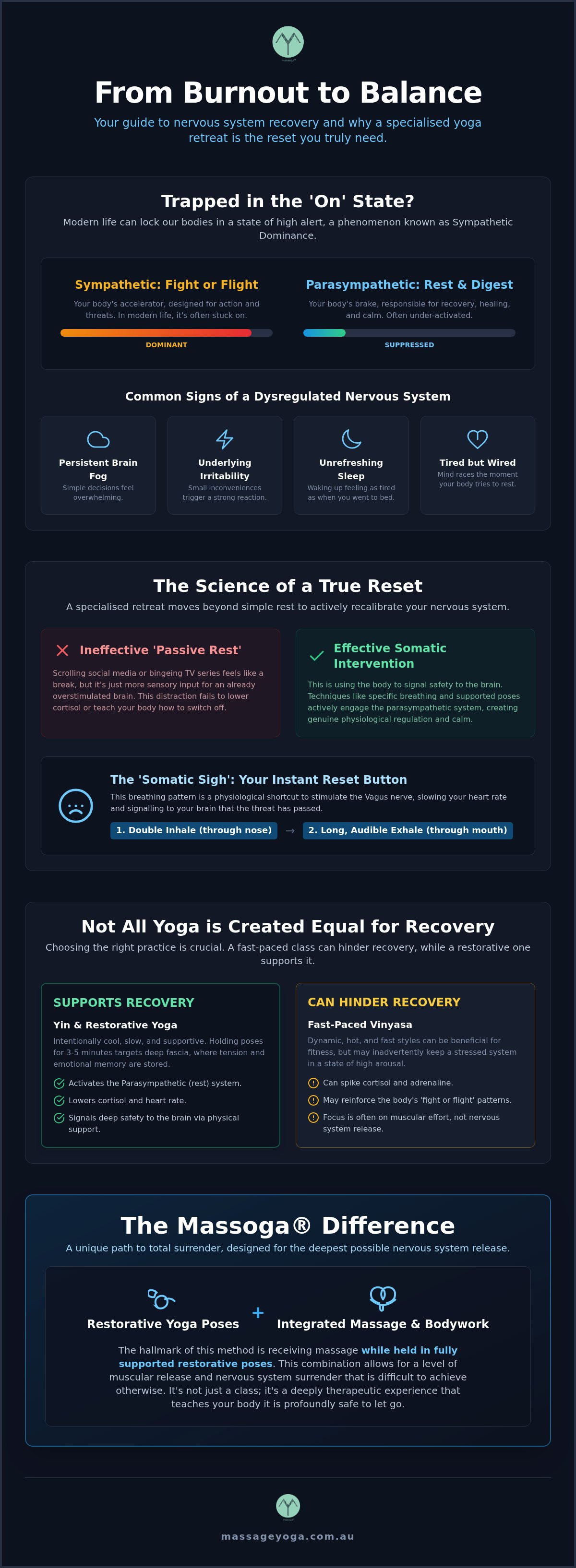
The nervous system is the invisible architecture of your daily experience. It's composed of two primary branches within the Autonomic Nervous System (ANS): the sympathetic and the parasympathetic. While the sympathetic branch prepares you for action, the parasympathetic branch is designed for rest, repair, and digestion. In a balanced state, your body moves fluidly between these two. However, modern life has created a phenomenon known as sympathetic dominance. This is a state where the "on" switch remains permanently engaged, leaving you trapped in a survival loop that your body cannot escape on its own.

This is particularly true for the "Woman Everyone Depends On". She is the one who organises the household, leads the team at work, and holds the emotional space for her friends. Her burnout isn't just tiredness; it's a deep physiological depletion. When your nervous system is dysregulated, you might notice:

  • Persistent brain fog that makes simple decisions feel like mountains.

  • An underlying irritability that flares up at the smallest inconvenience.

  • Sleep that feels shallow and unrefreshing, even after a full eight hours.

  • A sense of being "tired but wired" where your mind races the moment you lie down.

The Fight, Flight, or Freeze Response in 2026

In 2026, the predators we face are no longer in the wild; they're in our pockets. Digital overstimulation, the constant ping of notifications, and a relentless "hustle culture" mimic the ancient threats our ancestors faced. Your body can't distinguish between a demanding work deadline and a physical threat to your safety. Consequently, your adrenal glands continue to pump out cortisol, the stress hormone. Over time, these elevated levels lead to chronic inflammation and a sense of being flat out without ever feeling truly productive. A yoga retreat for nervous system recovery provides the necessary pause to break this cycle and lower these chemical baselines.

Why Traditional Rest Often Fails the Exhausted

We often mistake "checking out" for actual recovery. Spending an evening scrolling through social media or bingeing a series might feel like a break, but it's often just more sensory input for an already overstimulated brain. This is "passive rest", and for a dysregulated system, it's rarely enough. To truly heal adrenal fatigue, you need somatic intervention. This means using the body to signal safety to the brain. Unlike a weekend on the couch, a structured retreat environment uses specific physical cues to encourage the parasympathetic system to take the lead. It's the difference between distracting yourself from exhaustion and actively teaching your body how to drop into a state of genuine regulation.

The Science of the Somatic Sigh: How a Yoga Retreat Resets Your Vagus Nerve

The Vagus nerve is the longest nerve in your body, acting as a superhighway that connects your brain stem to your heart, lungs, and gut. It's the primary driver of the parasympathetic nervous system, responsible for the "rest and digest" state. When we speak about a biological reset, we are referring to increasing vagal tone. A high-quality yoga retreat for nervous system health prioritises this connection through the "somatic sigh." This specific pattern of double inhalation followed by a long, audible exhale sends an immediate signal to your brain that the threat has passed. It's a physiological shortcut that allows the heart rate to slow and the muscles to begin their release.

This feeling of internal safety is reinforced through proprioception, which is your body's ability to perceive its own position in space. When you are physically supported by bolsters and blankets in a quiet room, your brain stops scanning the environment for danger. It begins to look inward, fostering a sense of security that is often missing from our daily lives. This shift is deepened by sensory immersion. The subtle scent of calming oils, the gentle resonance of sound, and the warmth of a quiet space all work together to lower your heart rate and dissolve the static of modern living.

Yin Yoga and the Parasympathetic Shift

Unlike dynamic "hot and fast" styles that can inadvertently keep you in a state of high arousal, Yin yoga is intentionally cool and slow. By staying in a pose for three to five minutes, we bypass the superficial muscle tissue and target the deeper fascia. This myofascial release is critical because fascia holds much of our physical tension and emotional memory. When selecting a yoga retreat for nervous system care, the focus should always be on these deeper layers. As you linger in stillness, your startle response, that jumpy, reactive feeling, begins to dissolve. You aren't just stretching; you're retraining your neural signalling to accept stillness as a safe state.

The Power of Touch in Nervous System Regulation

Touch is perhaps the most direct way to communicate safety to the human brain. Therapeutic massage triggers the release of oxytocin, which naturally counteracts the presence of cortisol in the bloodstream. During restorative practice, hands-on adjustments act as a physical anchor, letting you know you are held and supported. Integrated bodywork is the seamless blend of massage and restorative movement. This combination allows for a level of surrender that is difficult to achieve on your own. If you feel the call to move from a state of "on" to a state of stillness, you might consider exploring a dedicated sanctuary for your recovery.

Why Traditional Vinyasa Might Be Hindering Your Recovery

There is a common misconception that rolling out a yoga mat is an automatic ticket to relaxation. However, for the woman navigating chronic burnout, a fast-paced Vinyasa or "Power" yoga class can often be another task to be mastered. If your body is already humming with adrenal fatigue, high-intensity flows can spike your cortisol levels rather than lowering them. Your nervous system, already in a state of sympathetic dominance, perceives the heat and rapid transitions as another demand. It stays on high alert. This is why a specialised yoga retreat for nervous system recovery prioritises stillness over sweat.

Trauma-sensitive approaches are essential for those with sensitive systems. For someone in a survival state, certain postures or the frantic energy of a crowded room can feel inherently threatening. At Massoga®, we explicitly exclude drop-in group classes and high-intensity styles for this very reason. We understand that true recovery requires a container of absolute predictability and gentleness. You cannot force a nervous system to relax; you can only invite it to do so by providing a consistent sense of safety.

When "Doing More" Leads to Less Recovery

Many high achievers fall into the trap of the achievement-oriented yogi. You might find yourself pushing for the perfect alignment or subconsciously checking the studio clock. If you leave a session feeling more "wired" than when you entered, your practice has become another source of stress. The shift from a "workout" mindset to a "work-in" mindset is a vital part of the healing process. It involves moving away from external performance and towards internal sensation. Instead of asking what your body can do, you begin to ask how your body feels. This subtle change in focus allows the startle response to finally soften.

The Necessity of a Controlled, Luxury Environment

The traditional drop-in model often fails those in deep exhaustion. The unpredictability of a revolving door of students can prevent the brain from truly settling into a state of surrender. Safety is found in seclusion and silence. In a luxury retreat setting, your ears and brain are finally allowed to rest from the constant hum of modern life. This controlled environment is the foundation of our methodology. You can learn more about why we choose stillness over flow to facilitate this deep neurological shift. True stillness isn't just the absence of movement. It is the presence of safety, allowing you to finally drop the weight of the world at the door of your yoga retreat for nervous system restoration.

Yoga retreat for nervous system

Selecting Your Sanctuary: What to Look for in a High-Quality Retreat

Choosing a sanctuary is a deeply personal act of self-care. It requires looking beyond the glossy brochures to find a container that can truly hold your exhaustion. When researching a yoga retreat for nervous system recovery, the practitioner-to-guest ratio is your most important metric. A high ratio ensures that you aren't just another body in a room; it means there is a pair of skilled hands available to support your release when a pose feels challenging. Seek out programmes that offer integrated bodywork, where therapeutic touch is part of the movement practice itself. This level of care, combined with personalised elements like private bodywork sessions, allows for a bespoke path to regulation that a standard group class simply cannot match.

Natural seclusion is another non-negotiable factor. Urban noise pollution keeps the brain in a state of low-level vigilance, preventing the deep silence required for recovery. By choosing a location away from the hum of traffic and technology, you allow your auditory system to finally rest. Verify that your facilitators are trauma-informed. This isn't just a buzzword; it's a specific framework of safety that ensures the environment remains predictable, gentle, and profoundly respectful of your internal boundaries. This foundation of safety is what allows the transition from a state of "doing" to a state of "being."

The Importance of Location and Environment

The environment you choose acts as a co-facilitator in your healing. Coastal settings and "Forest Bathing" have been shown to significantly lower blood pressure and heart rate by providing the brain with natural, soothing sensory data. When you explore our Magnetic Island Sanctuary, the rhythmic pull of the tide serves as a biological metronome for your own breathing. In this space, luxury is defined by the absence of the "mental load," allowing you to let go of every domestic responsibility.

Questions to Ask Before You Book

Before committing your time and energy, ensure the retreat's philosophy aligns with your current needs. Ask these specific questions to ensure the programme supports your nervous system:

  • Is the yoga restorative or active? Burnt-out systems need fascia-focused Yin and restorative practices, not heat-building flows that can spike cortisol.

  • Are the meals designed for adrenal support? Prioritise menus that support gut health and stable blood sugar to prevent further physiological stress.

  • What is the policy on digital devices? True recovery often requires a mandatory "unplugging" to allow the brain to recover from digital overstimulation.

The Massoga® Difference: A Unique Path to Total Surrender

Massoga® is more than a yoga retreat for nervous system health; it is a proprietary modality designed to dissolve the barriers between the physical body and the overactive mind. Founded by Wallis Murphy-Munn in 2016, this practice was born from a deep, compassionate understanding of the "Woman Everyone Depends On." It recognises that for many, even a traditional restorative yoga class requires too much internal effort. By integrating therapeutic massage directly into restorative Yin poses, Massoga® removes the need for you to perform or achieve. You are simply held. This synergy allows for a level of neurological surrender that neither massage nor yoga can achieve in isolation.

While our luxury retreats offer the most immersive experience, we understand that the journey to regulation often begins in the sanctuary of your own space. The "Massoga® at Home" option provides a gentle entry point for those beginning their journey, allowing you to cultivate a rhythm of rest before stepping into a full retreat environment. Whether you are on Magnetic Island or in your own lounge room, the goal remains the same: to move you from a state of survival into a state of thriving.

A Sensory Journey of Relief

The Massoga® experience is a slow, intentional descent into stillness. Imagine a room where the air is cool and scented with calming botanicals. The lighting is low. The silence is profound. As you settle into a supported pose, the gentle, firm pressure of a practitioner's hands begins to work on your fascia. This is the antidote for the woman who is tired even after she rests. Across a luxury retreat stay, you move through a predictable arc of recovery. You arrive wired, your thoughts a tangled web of obligations, and you leave softened. Your internal volume is turned down, and your capacity for presence is restored. Soften. Breathe. Immerse.

Your Next Steps to Stillness

Preparing for a deep rest experience begins with the quiet decision to prioritise your own regulation. If the idea of a full retreat feels like a significant leap, starting with a one-on-one private Massoga® treatment can be an ideal first step. These sessions provide a safe, trauma-sensitive space to explore the somatic sigh and begin the process of uncoupling from your stress response. You don't need to arrive with any prior experience or "flexibility." You only need to bring your willingness to let go. View our upcoming 2026 retreats and private sessions to begin your journey toward lasting stillness and genuine recovery. It is time to put down the weight of the world.

Reclaim Your Stillness and Step into Deep Recovery

We have explored how a dedicated yoga retreat for nervous system recovery moves you beyond the "wired but tired" loop by engaging the vagus nerve and prioritising somatic safety. You now understand that true rest isn't found in a crowded drop-in class or a weekend on the couch; it's found in the delicate blend of Yin yoga and therapeutic touch. By choosing a sanctuary that removes the mental load, you allow your body to finally remember how to soften.

Since 2016, Massoga® has been redefining rest through boutique, luxury retreats designed for the woman who holds everything together. We specialise in integrated bodywork and restorative Yin, offering small group settings that guarantee personalised care. You've carried the weight for long enough. It's time to transition from the noise of daily life into a state of profound presence.

Your path to a recalibrated life starts with a single, quiet breath. We look forward to holding space for your surrender and guiding you back to yourself.

Frequently Asked Questions

How does a yoga retreat actually help my nervous system?

A yoga retreat for nervous system health provides a controlled, sensory-rich environment that signals safety to the brain, allowing the parasympathetic system to take over. By removing daily stressors and using somatic techniques like the somatic sigh and fascia release, the body finally lowers its cortisol levels. This creates a vital physiological window for the body to repair itself, moving you from high-alert survival to a state of deep, restorative presence.

What is the difference between Yin yoga and restorative yoga for stress?

Yin yoga focuses on gently stressing the deeper connective tissues and fascia through long-held, passive poses to increase circulation and flexibility. In contrast, restorative yoga is about total support, using props like bolsters and blankets to ensure the body feels zero effort. Both are vital for stress recovery, though Yin offers a more active release of stored physical tension while restorative yoga prioritises absolute physiological stillness and a complete neurological rest.

Can I attend a nervous system retreat if I have never done yoga before?

Yes, you are warmly welcomed regardless of your experience level or flexibility. These retreats are designed for internal regulation rather than physical performance, making them accessible to everyone. The focus is on softening and surrendering rather than mastering complex postures. You will be fully supported by experienced practitioners who guide every movement, ensuring you feel safe and comfortable as you begin your journey toward a state of profound and lasting stillness.

How long does it take to see results from a nervous system reset?

Many guests report an immediate sense of relief during their first session, though a full physiological reset typically begins to consolidate after three days of immersion. By the end of a six-day yoga retreat for nervous system recovery, the reduction in cortisol and the increase in vagal tone become tangible. You will leave with a lowered heart rate and practical tools to maintain this sense of calm once you return to your daily life.

What should I bring to a luxury wellness retreat in Australia?

Pack comfortable, soft clothing that allows for easy movement and layers for cooler evenings in locations like the Otways. Most luxury retreats provide all necessary equipment, including high-quality mats, bolsters, and organic eye pillows. You might consider bringing a journal to record your reflections and a reusable water bottle. Most importantly, bring a willingness to unplug from your digital devices to allow your brain to rest from the static of constant overstimulation.

Is massage included in the Massoga® yoga retreat experience?

Yes, therapeutic touch is a fundamental pillar of the Massoga® method. Unlike traditional retreats where massage is a separate booking, our integrated bodywork involves receiving massage while you are held in restorative Yin poses. This simultaneous approach encourages a deeper level of surrender. Depending on your chosen package, additional private massage and facial treatments are also available to further support your sensory immersion and your body's physical release from chronic tension.

What is trauma-sensitive yoga and why is it important for burnout?

Trauma-sensitive yoga is a specialised framework that prioritises the guest's sense of agency and safety. It avoids triggering language or invasive adjustments, which is crucial for those experiencing chronic burnout. When your system is in a survival state, predictability and choice are essential for recovery. This approach ensures you never feel pressured or overwhelmed, allowing your nervous system to slowly lower its guard and finally accept the soulful invitation to rest.

How do I know if my nervous system is dysregulated?

Dysregulation often manifests as a persistent tired but wired feeling. You might experience chronic brain fog, an inability to settle even when resting, and heightened irritability. Physical signs include shallow breathing, digestive issues, and unrefreshing sleep. If you find it impossible to switch off from work or domestic responsibilities, your system is likely trapped in sympathetic dominance. Recognising these signals is the first step toward seeking a restorative somatic reset.


Comments


Written by Wallis Murphy-Munn

Wallis Murphy-Munn is the founder of Massoga®, a unique practice that combines the therapeutic benefits of massage with the restorative elements of Yin Yoga.


Her hands-on teaching approach has led to deeper relaxation for her students, inspiring the creation of Massoga®.


In addition to her practice, Wallis enjoys writing blog articles to share her insights, advocating for the importance of human touch and simple connections in an increasingly isolated world.

14.png

About

Yoga Retreats

Other Services 

  • Instagram
  • Facebook
  • LinkedIn

We acknowledge the traditional owners of the land in all the regions of the beautiful countries we travel to and experience on retreat. The custodians of Kulin Nation, in the regions of the Woiworung, Boonwurrung and Wathaurong People. The custodians of the Yunbenun of the Wulgurukaba People. We acknowledge their Ancestors past, present and future who nurtured and cared for Country for tens of thousands of years.

© 2025 Massoga® Massage Yoga | Website by Insight Culture

bottom of page